WORLD MOUNTAIN RUNNING ASSOCIATION

Author: Tomo Sarf

Greatest Mountain Runners of All Time: The Men

Over the last couple of weeks we’ve been taking a look back at some of the greatest mountain runners of all time. We did a recap on the women yesterday , so here’s the men’s list.  Soon we’ll ask you to vote for your all-time greatest mountain runners, male and female. Which runners will be crowned WMRAGOAT? VOTE HERE! 

 Obviously these sorts of lists are never perfect and they can be subjective. We’ve based our selection of the top six on results achieved but also on contribution to the sport. To help you make your mind up about who to vote for, we’ve included the opinions of well-respected runners at the bottom of the article.

Here are our six men:

Marco de Gasperi
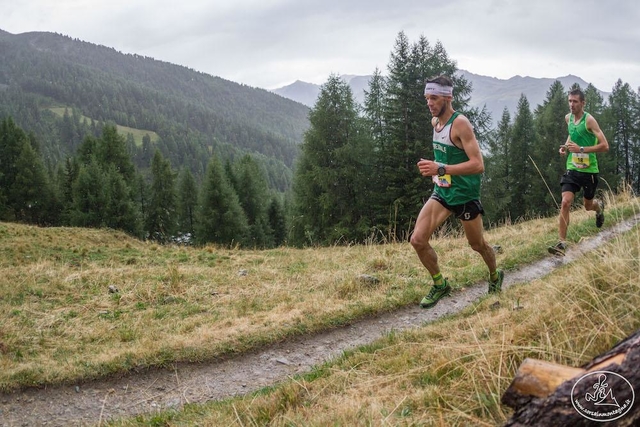
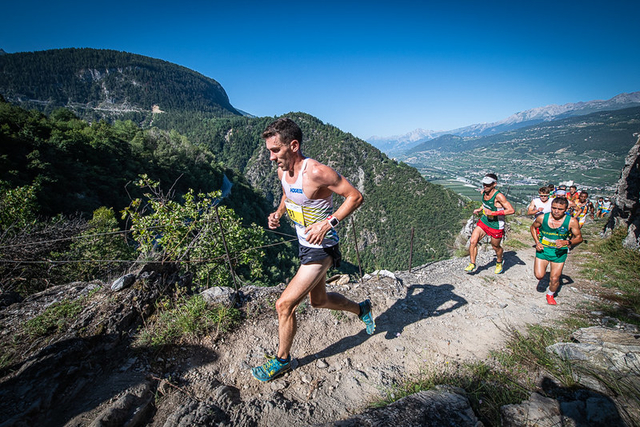
De GasperiIn any other era Marco de Gasperi would probably have dominated, but he was unfortunately running in the same era as Jonathan Wyatt! He still won 5 world championship golds between 1997 and 2007 (competing in a record 15 world champs), he won the world cup in 2001 and also 8 medals at the European champs. He won Sierre Zinal twice, among many other race wins and accolades.


Jonathan WyattWyatt1 crop
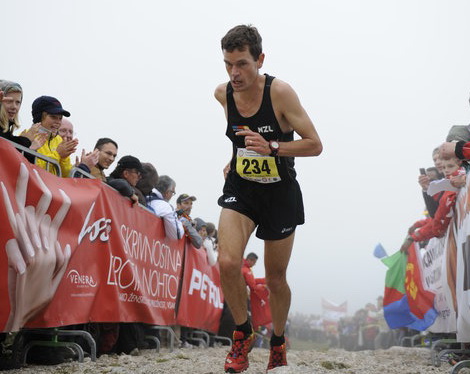
Certainly the most decorated male athlete in mountain running, Jonathan Wyatt won the WMRA Grand Prix Series (now the World Cup) an unprecedented 8 times and the world championships 6 times. Coming from a track background he also competed in two Olympic Games over the 5000m and marathon. He also competed for NZL in cross country, showing his diverse background.


Joseph Gray
Joe G

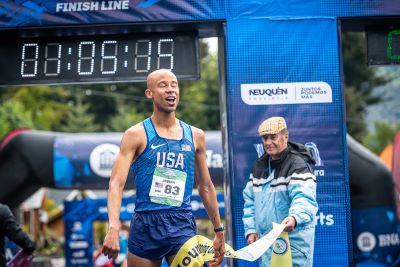
Joseph Gray’s hard work and consistency over the years can be best illustrated by the fact that he is an 18 time national champion. He won the world mountain running championships in 2016 and 2019, he’s the US record holder for the Mount Washington Road Race, he’s won the Pikes Peak Ascent, has an impressive collection of FKTs and he’s come second at Sierre Zinal. He’s also an incredibly adaptable athlete, having run cross country and track at a college level and he also has a long list of snowshoe accolades. He is also known for being a passionate advocate for giving back to the sport, particularly with his Project Inspire Diversity grassroots programme aimed at seeing inspiration and motivation among young minority distance runners. 

Bernard DematteisBernard Dematteis
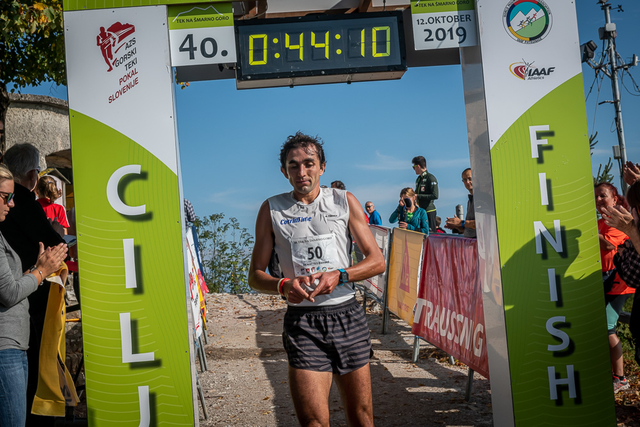
With his twin brother Martin, Bernard has been a hugely popular runner on the mountain running circuit for the last 15 years. The ultimate team player, Bernard has won 10 team medals with Italy in the World Championships, as well as an individual silver, and 14 medals at the European Championships, including 3 individual gold medals. A very strong performer in the World Cup, he has finished 4th for the last 3 years.

Antonio MolinariANTONIO MOLINARI
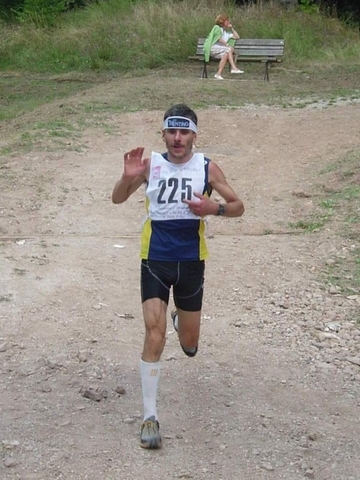
Italian Antonio Molinari put together an incredible string of results over more than 30 years. He competed in the World Championships an incredible 12 times, winning individual gold once and team gold 12 times. He also won the World Cup in 1998 and 2000, he won 3 European golds and 5 national titles. The statistics on his website say that between 1982 and 2016 he competed in an incredible 946 races and he won 428 of them and finished on the podium 684 times. The depth of his achievements in mountain running are surely unbeatable.


Kilian JornetKilianSZ
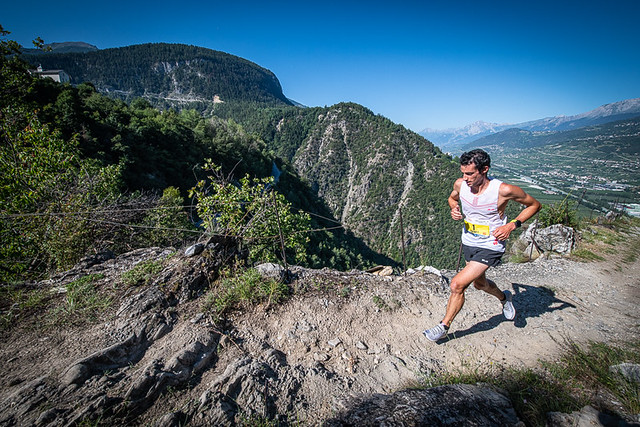
When you think of Kilian, you think of mountains. Whether he is running, mountaineering, climbing or doing skimo, he’s moving fast in the mountains. He also excels at every distance, from VKs to 100 miles. For the purposes of our feature let’s consider his record in mountain running – he’s won Sierre Zinal 7 times, finally taking the record in 2019, he’s won Zegama 9 times and he’s a multiple winner of the Skyrunner World Series. Unfortunately we haven’t had the excitement of seeing Kilian compete at a World Mountain Running Championships, but there’s plenty of time for that!

Here’s what other athletes said about our top six men:

Francesco Puppi on Jonathan Wyatt: “He achieved so much in mountain running and set incredible records (many stand still today…Jungfrau marathon, Hochfellnberglauf, Challenge Stellina, Mount Washington road race..). Also, for me it is very important that he always kept the focus on running fast on any surface. The fact that he competed in two Olympic Games over 5000m (Atlanta) and the marathon (Athens) is astonishing, besides winning 6 world mountain running championships (the only ever athlete to with both on uphill and up and down course) and having amazing track and road personal bests. He’s inspiring because he did so much for the sport and continues to promote it in humble yet effective way.”

Sarah Tunstall on Jonathan Wyatt (and Andrea Mayr): “there’s no real doubt in my mind that Andrea and Jono are the greatest mountain runners of all time. Their longevity, Championship victories, race records and Olympic Games appearances, for me, stand head and shoulders above any of the other “greats”.“

Francesco Nicola on Marco de Gasperi: “Marco de Gasperi is the greatest because of his ability to run fast across a whole range of courses and distances. His 5 world championships and all the records he set speak for themselves.”

Andrew Douglas on Bernard Dematteis: “Bernie is one of the most genuine and humble athletes on the circuit, and along with his twin brother Martin, are fantastic ambassadors for mountain running. I’ve spent many a race in awe of his ability to bound his way so effortlessly up the mountain, and then absolutely hammer it down the descent; although usually I wouldn’t see him on the descent as he’d be so far ahead! In each of the first 3 up and down championships I competed in (2014 & 2016 Europeans, 2015 Worlds) he was virtually untouchable to his fellow Europeans, such a fantastic racer. But not only that, he always makes time to chat with his fellow competitors and is someone I’ve always looked up to in terms of the way he conducts himself.”

Other runners who could have made the list:

Helmut Schmuck

Austrian Helmut Schmuck was dominant during the 90s, winning the World Championships in 1992 and 1994 and the European Championships in 1995 and 1997. He also competed in the marathon in the 1992 Olympics.

Marco Gaiardo

Italian Marco Gaiardo won the European championships in 2003 and 2006 and world championship bronze in 2003

Younger runners who’ve made a big impact

Andrew Douglas

After bursting onto the scene and winning the World Cup in 2015, Andrew Douglas then became frustrated with a string of results where he finished second. So, having taken a year’s sabbatical from his job in 2019 he set about regaining the world cup and it paid off. Has achieved a number of top 10 finishes in both the European and World Championships

Sandor Szabo on Andrew Douglas: “I vote for Andrew because we are the beasts who race all the races we can in the World Cup, and he cheers me up every time we talk. He’s really motivating to me, just like Andrea (Mayr) also!”

Fujio Miyachi on Andrew Douglas: “His performance last year was very good all year round, and he was a deserving World Cup champion.”

Jacob Adkin on Andrew Douglas: “an incredibly genuine guy. His attention to the details of training, life-balance and getting the best out of oneself is truly motivating.”

Sarah Tunstall on Andrew Douglas: “Andy is a racing machine! To watch him race is amazing as he can dig so deep. I’d love to see him get a medal as he’s been at the top of his game for so long but even a bit of silverware wouldn’t quite do justice to how versatile he is as a mountain runner.”

Francesco Puppi

Still a young athlete (at 28) with his best yet to come, Francesco Puppi has already won the world long distance mountain running championships in 2017 and finished second after an epic duel with Jim Walmsley at the 2019 championships. He also finished 3rd in the long distance championships in 2015 and has won 2 bronze medals in the Europeans.

Jacob Adkin on Francesco Puppi: “inspirational for his will-power and determination to achieve goals and not scared to dream, always with a smile.”

Robbie Simpson

Robbie Simpson has achieved a huge amount in mountain (and road) running over the last decade, so it’s hard to believe he is still only 29. He finished 3rd at the 2011 long distance championships, won a silver in the 2014 Europeans and a bronze in the 2015 World Championships. He has also had considerable success on the road, most notably winning a bronze in the 2018 Commonwealth Games. He’s won the Jungfrau Marathon twice and he’s finished in the top 5 at Sierre Zinal an incredible 7 years in a row, including three 2nd places. 

Sarah Tunstall on Robbie Simpson: “I’ve met very few people with Robbie’s work ethic in training. I think he must rank as GB’s best male mountain runner ever in terms of medals and performances on the big stage. Many of his race results over the past five years or so are incredible and, maybe with less questionable competition, I think we would be talking about him in relation to Jono.”

Voting will open very soon, so get thinking about who your male greatest mountain runner of all time is!

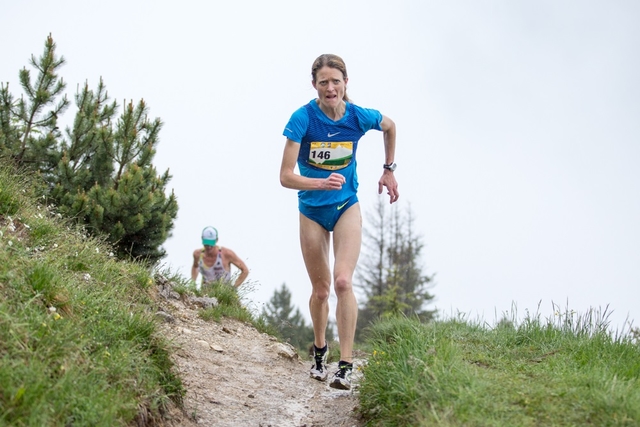
Greatest Mountain Runners of All Time: The Women

Over the last couple of weeks we’ve been taking a look back at some of the greatest mountain runners of all time. We’re going to recap them with one article on the women and one on the men and then we’re going to ask you to vote for your all-time greatest mountain runners, male and female. Which runners will be crowned WMRAGOAT? VOTE HERE! 

 Obviously these sorts of lists are never perfect and they can be subjective. We’ve based our selection of the top six on results achieved but also on contribution to the sport. To help you make your mind up about who to vote for, we’ve included the opinions of well-respected runners at the bottom of the article.

Here are our six women:

Andrea Mayr

MayrAustrian Andrea dominated women’s mountain running for many years, often winning by large margins and finishing highin the men’s field. Her results speak for themselves but see runners’ quotes about her below. She is a 6-time World Champion (2006, 2008. 2010, 2012, 2014 and 2016) and won the World Cup in 2010, 2014, 2016 and 2018.
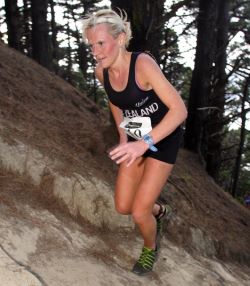


Melissa Moon

Melissa Moon 2Melissa, from New Zealand, started her running career in track and cross country, where she was a national champion over 5000m and 10000m and 7 time national cross country champion, but her unexpected third place in the 1997 World Mountain Running Championships confirmed to her that it was mountain running she wanted to focus on. But after another third place and a fourth in that competition she knew she had to adapt her preparation. It worked! She became World Mountain Running Champion in 2001 and 2003. Read our interview with Melissa. 
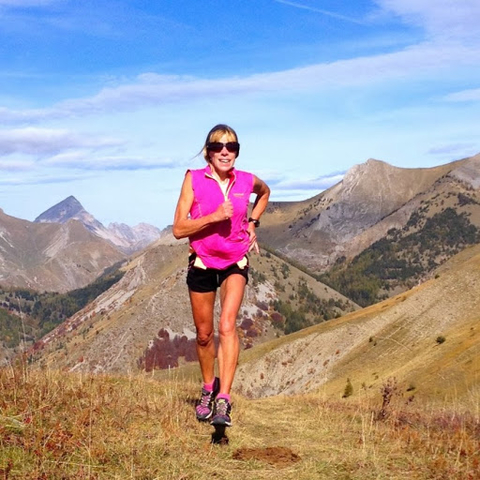
Isabelle Guillot

Isabelle Guillot

Unparalleled in terms of longevity, France’s Isabelle Guillot put together an amazing run of results over a long period, demonstrated by winning bronze in the European Mountain Running Championships in 1988 and again in 2006. During that time she won 4 gold, 3 silver and 2 bronze medals in the World Championships, as well as European gold. She has had considerable success as a masters athlete since.


Izabela Zatorska

ZatorskaPoland’s Izabela Zatorska achieved an amazing run of podium and top 10 finishes between 1996 and 2005, including 2 European Championship golds in 1999 and 2000, and 3 World Cup wins, in 2001, 2004 and 2005. In the World Championships she achieved a silver and three bronzes. She also won iconic mountain races like Drei Zinnen, Challenge Stellina and Smarna Gora. She also won many road races all over the world, from 5k to marathon. 
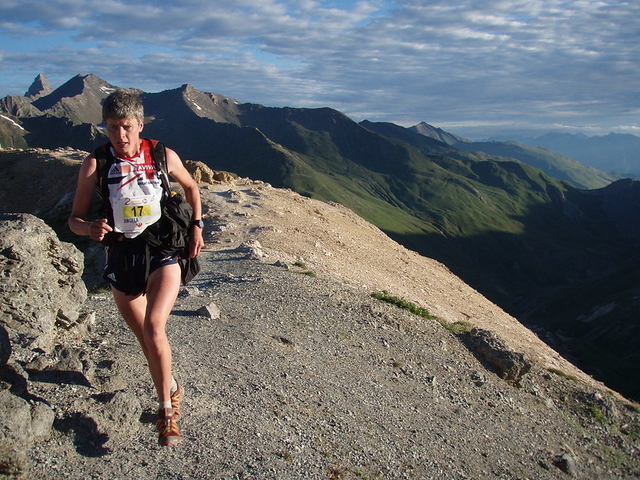


Angela Mudge

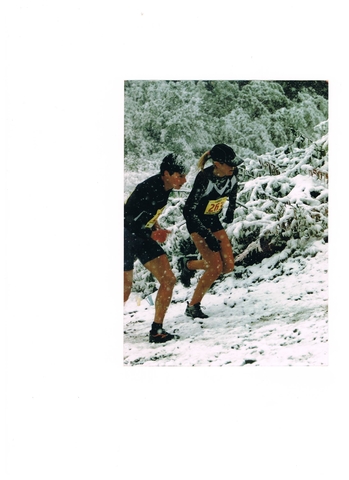
3717502571 98b4d4347c cWith a background as a (Scottish) hill runner and fell runner (she won the British Fell Running Championships 5 times), Angela was always going to be a tough competitor in mountain running. She achieved 3 World Cup victories, won the 2000 World Championships and came 2nd in the same competition in 2003 after an epic duel in the snow in Alaska with Melissa Moon, leading Scotland’s women’s team to the gold medal. She won Pikes Peak Marathon and Sierre Zinal, breaking many course records at iconic international races during her career. Read our interview with Angela.
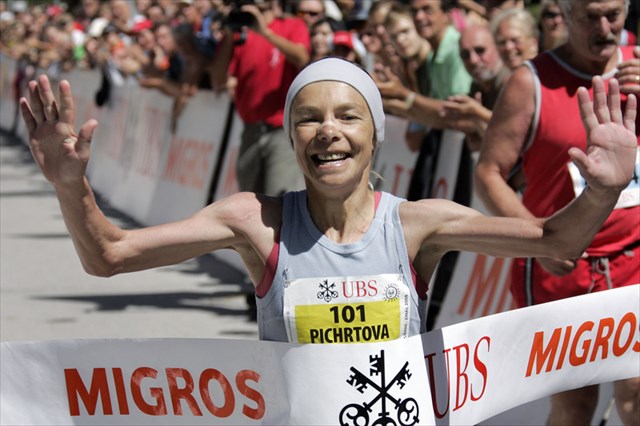
 

Anna Pichrtova

Anna PichrtovaAnna Pichrtova (nee Baloghova) was born in the Slovak Republic and initially balanced marathon running with mountain running. Her mountain running debut was in the World Trophy in 1992, where she won the silver in the junior race and then finished 13th in the senior race (for Slovakia) – in the same competition! An early feat which set the scene for her hugely successful career. She proceeded to do well in the World Trophy in 1993 and 1994, but it was the period of 2001 – 2009, competing for the Czech Republic, where she really dominated. She won gold, 2 silvers and a bronze in the World Championships, 2 golds, 2 silvers and a bronze in the Europeans, 2 golds in the World Long Distance Mountain Running Championships and she won 2 World Cups. Her Sierre Zinal Course Record stood for 11 years, finally falling in 2019.
Here’s what other athletes said about our top six women:

Andrew Douglas on Angela Mudge: “At the risk of facing the wrath of Angela (I know she won’t like what I’m about to say…), she is one of the true greats of the sport and her achievements stretching far back to the mid-90’s absolutely reflect that. I would urge anyone reading this to look into her journey from the Fells to World Champion in 2000 (and subsequent nomination at the 2001 Laureus World Sports Awards) as I can’t possibly do it justice in this short summary. Angela is the current head of hill and mountain running in Scottish Athletics and gives a huge amount back to the sport; it’s an absolute privilege to have someone of her experience (and modesty!) at the helm.”

Fujio Miyachi on Andrea Mayr: “As everyone knows, her speed and climbing ability are amazing.”

Sarah Tunstall on Angela Mudge: “Angela Mudge has probably been my greatest inspiration and personally I have always looked to her times as a guide of how well I have raced on the Mountains. When I was still a junior I saw her storm the Inter-county XC (even though the commentators didn’t know her name) and qualify for the 1999 World XC. This always stuck with me and gave me confidence when I used to race the (much) quicker track girls over XC. In 2009 when I finished 2nd on the same course, seeing her win all those years previously had given me some kind of weird belief that Mountain runners could mix it with the Steph Twells of the world!”

Anne Buckley on Andrea Mayr (and Jonathan Wyatt): “Wyatt and Mayr for me. At their best they were pretty much invincible and so far ahead of the rest. If they were on the start line you knew they’d win. Mayr used to finish well up among the decent men!”

Angela Mudge on Andrea Mayr (and Jonathan Wyatt): “Without doubt it’s got to be Jonathan Wyatt  and Andrea Mayr. They’ve both performed outstandingly at the World Championship and have numerous course records set on the classic uphill only races, no one could touch them in their prime.”

Jacob Adkin on Angela Mudge: “Always true to the spirit of hill/mountain running, Angela is an unassuming legend from whom anyone can learn a lot from.”

Other runners who could have made the list:

Gudrun Pfluger

Austria’s Gudren Pfluger achieved 4 world championship wins and 1 silver between 1992 and 1997

Rosita Rosa Gelpi

Showing early promise by winning the junior world championships in 1992, Rosita Rosa Gelpi went on to win the European championships in 1998, then the world championships in 1999 and 2004.

Younger runners who’ve made a big impact on the sport:

Lucy Wambui Murigi

Winner of the 2017 and 2018 World Mountain Running Championships, Lucy Wambui Murigi has flown the flag for female African runners in mountain running. Here’s what Francesco Puppi had to say about her talent: “She’s so versatile and capable of performing well in short and longer races. She has the huge merit to have made mountain running more popular in Kenya and Africa in general. Although she hasn’t been as dominant as Andrea Mayr I believe her contribution to the sport has had greater reach and I admire her a lot.”

Sarah Tunstall

GB’s Sarah Tunstall has been incredibly consistent over the years, finishing 3rd in the European championships in 2008, 3rd in the World Championships in 2009, then 3rd again in the Worlds in 2017. She won the World Cup in 2015, was 2nd in the Europeans and 3rd in the Worlds in 2017. This is what Jacob Adkin said about her: “a truly inspiring person and athlete for her strength of mind, Sarah is selfless in imparting her knowledge and helping others get the best out of themselves.” Read our interview with Sarah.

Voting will open in the next few days, so get thinking about who your female greatest mountain runner of all time is! 

‘It’s Just You Against The Elements’ – Interview With Angela Mudge

If you’ve been following our ‘greatest mountain runners of all time’ (#WMRAGOAT) series on our Facebook, Twitter and Instagram, you’ll have seen that Angela Mudge has been a very popular nomination on that list. Living in Scotland and starting out in hill running and fell running,  Angela proved a very tough competitor in mountain running. She achieved 3 World Cup victories, won the 2000 World Championships and came 2nd in 2003, as well as notching up a large number of victories in mountain races around the globe. Since then she has given a huge amount back to the sport and is currently the National Lead for Hill and Mountain Running in Scotland. We spoke to her to find out more about her career highlights and what her future running plans are. 

 What have the highlights of your mountain running career been? Do any races stand out in your memory?

 I raced and trained in so many places it’s difficult to pick out single highlights, it’s often the people and the weather that make the experience.
 
I have special memories of winning Sierre-Zinal in 2000. I’d never experienced such an electric atmosphere in a race where I just got sucked along to a fast time. It’s not so fast now… I was the first woman to break the 3 hour barrier, running 2.56, and I’ve watched the times get much faster ever since!
 
I competed in the Skyrunning Series for a few years and one of my favourite races is Dolomyths run, Canazei. It’s such a spectacular mountain with an amazing scree slope.
 
Closer to home the one race that stands apart is the Isle of Jura fell race, it’s a magic place, very rough terrain and you never know what the weather will throw at you. Blazing sunshine one year then mist and high winds the next. It’s just you against the elements.
 
What have your proudest achievements in running been?
 
Winning the World Trophy in 2000. It was my first stint at altitude training so I had no idea how fit I was and it was a bit of a surprise to find myself leading the field.
In 2003 the Scottish women won the team event, this was special as all three of us competed for the same club – Carnethy Hill Runners in Scotland. There’s not many clubs that can claim to be World Champions!
 
Out of hill/mountain running winning the Intercounties Cross Country Championships in 1999 stands out, none of the XC runners knew who I was and even the commentator had to scramble around to find out who the Scot was who was leading the field.
 
Angela Mudge
Angela in a more recent cross country race (copyright Scottish Athletics)
 
We saw your recent foray into the currently popular sport of stair climbing for the 3 Peaks Challenge! How did you find it?
 
Extremely boring! I only completed the challenge because I’d met one of the organisers at an event and it was for a charity who were raising funds for a college to produce PPE. My stairs are very narrow, so running up and down them was never an option. It took a very long time and I definitely wasn’t being competitive. The aim was to finish injury free which sounds simple but when you have 3 dogs trying to join in, is quite an achievement.
 
Scottish athletes have been enjoying great success in mountain running in recent years with athletes like Robbie Simpson, Charlotte Morgan, Andrew Douglas, Jacob Adkin, and many others. Is it an exciting time for Scottish mountain/hill running? Are there a lot of juniors being inspired by this success?
 
It’s a brilliant time for Scottish endurance running across the board with so many athletes doing so well in numerous endurance events. I just hope we can continue. I’m the National Lead for Hill and Mountain running so am keeping my fingers crossed that juniors are being inspired by their success. With Andy and Jacob in the headlines the sport receives much more publicity than previously, so juniors are more aware of the discipline and hopefully tempted to have a go.  
 
Angela Mudge
(copyright Scottish Athletics)
 
Having raced all over the world are there any races that you never had the chance to do, but would still love to run?
 
There are new races popping up all over the place which seem to be getting longer and more extreme each year. I always had my eye on the UTMB but as it’s got more commercial I’ve shied away from it. I now prefer low key races which offer an adventure but have smaller fields and no hype. I love the simplicity of our sport in the UK which you just race and then disappear off down the pub at the finish. At the moment I just want to complete the Lakeland Classics and races on my doorstep which I missed during my international career.
 
 Once this current public health crisis has passed and it’s ok to go out and run in the hills again, where will you head to and why?
 
I’m lucky as through the crisis I can run up the hills on my doorstep. The hill above my village is only 400m but a lovely little peak. However, I am missing the Highlands, particularly the west coast. I’ll probably pick an obscure peak where I’ll have views of the islands and the hill to myself. The munros are going to be busy when this is over.

Cancellation of the 2020 World Cup

It is with much regret that the WMRA has decided that the Mountain Running World Cup in 2020 should be cancelled. This is a very difficult decision but in the end we feel it is the right one to ensure that our Mountain Running athletes, race organisers and all volunteers and spectators stay safe in these uncertain times. WMRA always want a fair and exciting competition and we have seen that many runners would not be able to attend World Cup events and we would not want to put any of our Mountain Running community at risk.

We do have ideas to keep athletes and organisers excited about mountain running competitions in 2020 in whatever format Mountain Races will be able to be run as the Coronavirus situation develops.

WMRA offers Associate Membership to all Mountain Running competitions (HERE). We will work directly with these Associate Member races to inspire them to work locally together and bring an exciting element to this year’s Mountain Races when it is safe to start up again.

Please stay safe and when running outside, respect the guidelines and rules within your communities and give other people space.

Jonathan Wyatt
WMRA President

In At The Deep End With Sándor Szabó

We’ve been getting to know our members of the WMRA athletes commission over the last few months. Next up it’s Sándor Szabó, the Hungarian athlete who finished 8th in the 2019 World Cup. He got into mountain running by accident and he’s never looked back!
 
How are you doing during the current COVID-19 pandemic? What is the situation in Hungary?
 
I’m working as a running coach, giving online training plans, and I’m lucky that this virus has not affected my work. The situation in Hungary is not that bad in my opinion. We have some restrictions about leaving home, but not serious ones. However I live in the capital (Budapest), where this pandemic is the worst in the country. I didn’t feel well when the whole thing started, but I don’t know it was the covid-19 or not, because I had only a higher temperature than normal, not a fever, and it only lasted for one evening. After that I had some symptoms, but not the serious ones. I got fully better after just 1 week, and I could train with it, but I didn’t, of course. 
Sandor 3
 
Are runners able to train pretty normally in Hungary or is running restricted?
 
Running is not restricted, if you go alone, or with someone you live with, so yeah, we are able to train as much as we like 🙂
 
Can you tell us about your running history? Did you run when you were at school? Have you competed on the road and track, as well as trail and mountain?
 
I started running in 2004, when I was 10 or 11 years old. At first I competed on track and cross-country where I had some podium places in the national champs, but I didn’t like them so much. I then did road races later, which was still not that good for me, and I just got into mountain running 6-7 years ago by accident, but that was my best decision so far. We had some indications that I love more trail running than track or road races, because I managed to be in the national team 2 times in cross country, which lead me to the European Champs, first in Slovenia, then Hungary, and the second one gave me unforgettable memories! My story with mountain running started when I did not wanted to go on a flat trail race, so I conviced my coach to take me to the Hungarian mountain running champs, in 2013, which I won, and got a ticket to the national team, which leaded me to the WMRA World Champs, Krynica-zdrój, Poland. That was my first international mountain running race, and my second in this category only…It was in at the deep end for me!
Sandor 4
 
What are the best mountain races in Hungary?
 
The best races are those around the Kékes mountain, which is the highest mountain in Hungary at 1014meters. Unfortunately we can’t have races with a lot of ascent because we don’t really have enough mountains for it.
 
If you can’t race for most of this year what will you focus on with your running?
 
First I had to accept this, because racing is the most important thing in the training for me, it’s what makes me to do the training, to compete with others. After I accepted this situation, I focused on developing new skills, training plans I cannot try out because of the season. However I rested a bit, because I could fit that in the program too, but now I’m training for the competitions that we’ll have in the future. I have some insane plans, which I can try out now. I’m curious about the benefits and experiences of them. The main goal with this is to maintain my motivation and focus on this, rather than the races which are cancelled or postponed. Sandor 5
 
 Why did you volunteer to join the WMRA athletes’ commission?
 
It’s an honor to me, to be a part of something that I love to do, and even more motivating, that the WMRA would like to hear my opinion as well. It means a lot to me, just like mountain running.
 
What developments or improvements would you like to see in mountain running in the future?
 
What I can imagine is some kind of live broadcast from the races, more video interviews, and the web page of the WMRA to be more modern, which it is day by day.
 
What have you learned during the COVID-19 lockdown?
 
I already learned that I can handle more weekly kms than I’m doing basically, because I had time to test some madness in training these raceless times. Now I know that it isn’t just about the races for me, that I can find motivation a lot of ways. However I worried a lot about not seeing my family a long time, which is really bad, I realized that the most important thing is to be safe, and protective with others. I think I’ll learn some other things later on…
 
Follow Sándor on Instagram
 
Sandor WC

Where Are They Now: Melissa Moon

Over the next few weeks we will be taking a look back at some of the greatest mountain runners of all time. We’ll be reminiscing about epic races, learning which legends inspired generations of runners and finding out what some of those legends are doing now. First up, we speak to Melissa Moon, two-time World Mountain Running Champion. It turned out she’s been doing some reminiscing herself. She found these old photos to illustrate our article…


Melissa came into mountain running from a track background. She explains, “It was my unexpected 3rd place at the 1997 WMRC in the Czech Republic that confirmed to me Mountain Running was the discipline in athletics I wanted to concentrate on. I had been competing in the 5km and 10km on the track at the World Student Games in Sicily when I was persuaded to stay on in Europe and compete in my first Mountain Champs a week later.”

WMRC Czech Republic 1997

3rd place in the Czech Republic in 1997

She says of her experience in that first World Championships, “I was truly humbled by what my body and mind had to endure during the race, I had never experience anything quite like it and was determined to get to grips with it. I also loved the culture of the mountain runners, just like an extended family, and I felt energized in the mountain and villages of Europe.”

The following year Melissa finished 3rd again in the Championships on the Island of Reunion but, she explains, “it was at the 2000 WMRC in Bergen, Germany while attending the prize giving after a 4th place finished that I vowed I would do things differently the following year.”

She reasoned: “How could I possibly be at my best after 30 hours of travel from New Zealand to Europe 6 days out from the race of my life? Things had to change.”

2001 saw Melissa lining up on the World Championships start line in Arta Terme, Italy, and, she says, “I knew I was prepared. I was acclimatised having arrived in Europe 5 weeks early and tougher both mentally and physically due to the build-up races I had competed in Susa and Kitzbuhel. I had also spent many days training over the Arta Terme course understanding every aspect of it. I was determined to win.”

WMRC 2001 Arta Terme Win

Melissa winning in Arta Terme in 2001

Her preparation paid off when she took the victory. “The sense of relief when I did win was indescribable. A huge weight had been lifted off my shoulders and I felt a euphoria knowing that I had finally achieved the ultimate result I could in my chosen area of athletics. I buzzed on that feeling for months after.”

“Defending my world title in Alaska was tremendously satisfying for different reasons, one was handling the expectations as a previous winner and the unexpected snow, also having to find a new pair of shoes to race in 1 hour before the start so as not to slip in the snow. It was about keeping a sense of composure in adversity that was a highlight.”

Alaska WMRC battle with Angela Mudge

Battling with Angela Mudge in Alaska in 2003

When Melissa was at the height of her mountain running career, she was in good company with her Kiwi compatriates. Around the same time Jonathan Wyatt was dominating men’s mountain running and Kate McIlroy and Maree Bunce also having success on the women’s side. Melissa says, “The mid 90’s and early 2000’s were a fantastic time for New Zealand Mountain Runners, we had a great team spirit and it was very motivating to see the black singlet and silver fern on the dais. Jono Wyatt gave us the opportunity to experience our national anthem many times; he was a great ambassador for the sport and New Zealand.”

001

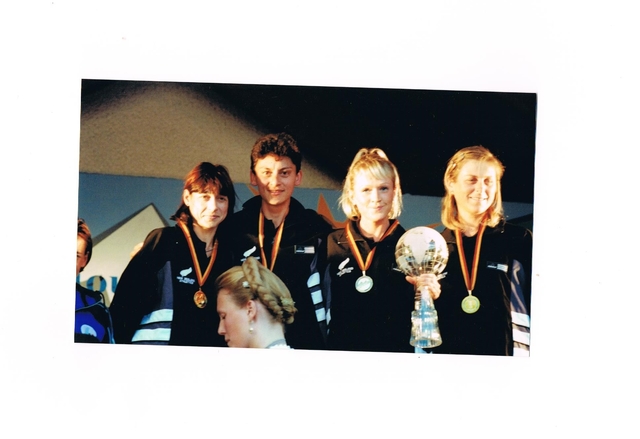
New Zealand win team gold in Bergen, Germany 2000

So what does Melissa do for a living, post her elite running career and what sort of running does she do now? “Throughout my running career I was a Secondary School Teacher who taught special needs students. 10 years ago I trained as a massage therapist and now specialise in Elderly and Dementia care massage and individuals with physical disabilities such as MS and those who have experienced a stroke. I also spent many years working at the Compassion Centre Soup Kitchen and with our homeless in Wellington on a voluntary basis.”

“Since my retirement from competitive athletics in 2014 I have coached and guided a blind runner to compete in the London Marathon and last year ran up the Empire State Building to raise funds and awareness for the New Zealand Spinal trust. I run 5-6 days a week with my longest run around 2 hours, on my to do list is to run the Great Wall of China Marathon!”

With many runners in lockdown all round the world at the moment, stair running has become a popular pastime. We know that Melissa has a bit of experience of the very sharp end of this sport, so we asked her about it and enquired as to whether she had any good tips for us. “In the twilight of my career I needed a new physical and mental challenge and thought racing up the World’s tallest building would be a great idea.”

“The iconic Empire States Building was the one to win, 1576 stairs, 86 floor and one of the toughest challenges I ever undertaken. Your Heart rate sky rockets to 170bpm, lungs are burning and the lactic acid plays havoc with the body. Specific training is essential and I was fortunate to have access to Wellington’s tallest building to allow my body to adapt. My advice is run 2 stairs at a time and use the handrails for momentum.”

We also asked Melissa about any future running plans she has. “In 2021 it will be 20 years since I won my first World Title, the greatest race of my life and I plan to go back to Arta Terme to have a little jog over the course, reminisce and celebrate! And figure out where the hell has 20 years gone!!!!!!”

News On The World Mountain Running Championships 2020

Here’s a statement from Haria Extreme Lanzarote, hosts for this November’s World Mountain Running Championships:

“In an especially tough year, focusing on our passion and staying positive is something that helps us to maintain our mood, our mental health and our physical health. 2020 has not started as expected, but we want to end it in a very special way with an amazing World Mountain Running Championship.

This is why we are working hard and full of hope, keeping in mind that we have a spectacular objective for November. Trusting that the health situation is normalized by then, the 36th World Mountain Running Championships – Haría -Lanzarote – Spain – on November 13th and 14th 2020 will become a powerful race for the season ending and most likely the only off-road world championship in the year.

This event will land for the first time in Spain, and it will be held in the wonderful town of Haría, located in the north of Lanzarote, a volcanic island in the Atlantic Ocean. The organization has stayed on track to offer an unforgettable event and has already confirmed with the WMRA some of the most relevant matters for the World Championships: courses, logistics, ceremonies, the closure party… Everything is getting ready for this unique event for the island.

The distances and routes offered for Haría – Lanzarote – Spain, Nov. 2020 will be exactly the same for the Mountain Running World Championships and for the Open race after adjusting them for 2020. On the morning of Friday, November 13th, the classic race of the World Championships will be held, a race with a predominantly uphill course that will be divided into two distances: 5 kilometers for juniors and 12 kilometers for seniors.

The 5 kilometer event will host the World Championship junior category and will have an Open event called HXL 5. The race will start from the town of Haría and has the finish line at Peñas del Chache.

Alongside this, the 12 kilometer race will host the Classic World Mountain Running Championship and in its Open modality it will give any participant the opportunity to run the same course, with the start in Caleta de Famara and the finish line in Peñas del Chache.

For Saturday, November 14th, one of the greatest highlights of the year will be with the World Long Distance Mountain Running Championship, which will use the traditional route of the Haría Extreme Lanzarote Marathon with the lava climbing on the way to Guinate as an iconic image of the race.

This special event which will have a big party for an unforgettable ending and which will give the chance to the athletes and delegations to discover the unique island of Lanzarote.”


From the WMRA side we can see that the organisation team are on schedule where the local Covid-19 pandemic situation for them fortunately has only very lightly touched their area. They have been able to contain it so far allowing the work to continue on organising the events. WMRA will of course keep abreast of any restrictions that may still affect travel or the hosting of the championships over these coming weeks and months.

Find more information about the 2020 World Championship courses and schedule HERE. 

Update on WMRA Mountain Running Events from the President

I would like to thank all our mountain running community for their patience and positive comments during this difficult period for everyone.  We are updating our calendar with the latest information we have from our race event partners.  Our priority is that people who participate or organise the events are safe and when it is possible to begin to run and start the events we will follow the guidelines set out by the National and Local Governments of the locations where the races take place.

The situation is changing almost daily but i know that you would like to know what is happening with the events on the WMRA calendar that are scheduled for 2020.  

WMRA has set a milestone date of 29 May where we will send an official communication to National Athletic Federations to define at that time what changes will be needed to our events based on the latest information known.  

But to give you the situation today for the WMRA it is as follows:
 
1. The WORLD CUP changes will be announced with new rules for the WORLD CUP that will be necessary for 2020 at the end of May.  

2. The WMRA/WMA World Masters Mountain Running Championships in Austria are scheduled for 4-6 September and are on schedule as planned at the time of publishing this notice.  WMRA will publish another update on this event on 29 May or if there are any changes to the date then we will publish this as soon as we are notified.

3. Under 18 Championships have a new date of 17 October.  The organisation is on schedule for this new date.

4. The World Mountain Running Championships and Long Distance Mountain Running Championships scheduled for 13 and 14 November in Haria, Lanzarote have no changes at this time.  WMRA is in contact with the organisation with travel advisories for this location that could affect travelling teams.  To date no specific travel restrictions are anticipated in November.

Thank you for your attention and please stay safe and healthy

 Jonathan WYATT

WMRA President

Interview with World Champions Joe Gray and Grayson Murphy

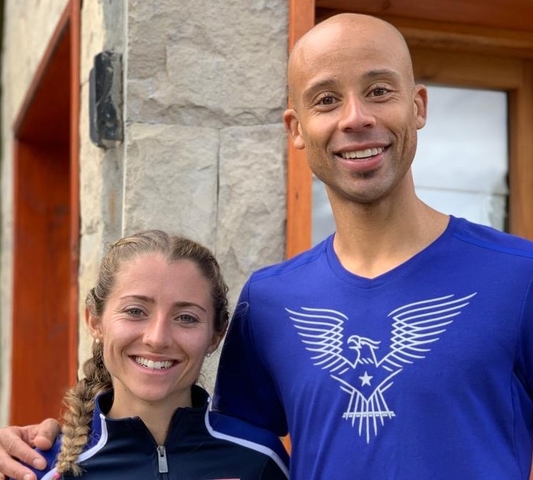
Mayayo Oxigeno of Carreras de Montaña spoke to Joe Gray and Grayson Murphy, both of team USA, and both winners of the classic mountain races at the 2019 World Mountain Running Championships in Villa La Angostura (Spanish version of article below but interview in English).

 We welcome world champions JOE GRAY and GRAYSON MURPHY. We interview them as the 2020 season gradually comes nearer the 2020 WMRA World Championship at Lanzarote. USA’s Joe Gray and Grayson Murphy won the senior races over the classic distance, 14km, on the first day of the World Mountain Running Championships in Villa La Angostura on Friday (15th November 2019).

The heavy rain and strong winds had an impact on all four races as they included river crossings, which were quite high due to the rain. Both were up and down courses, concluding with fast descents. Today we go over their victories in Patagonia again, and also look out for their expectations for #WMRALanzarote.

Watch the full interview here: 

Read more about the 2019 World Mountain Running Championships in Patagonia. 

CAMPEONES DEL MUNDO MOUNTAIN RUNNING WMRA: Joe & Grayson. «Soñamos con el Mundial Lanzarote 2020»
Publicado por mayayo oxigeno el abril 14, 2020 en Carreras de montaña

.
Nuestra sección MOUNTAIN RUNNING entrevista a los campeones del mundo JOE GRAY y GRAYSON MURPHY. Ellos firmaron el doblete USA en la Classic-14k del 2019; mientras Jim Walmsley y Cristina Constantin ganaron la Maratón. Los entrevistamos a medida que 2020 se acerca al Campeonato Mundial WMRA 2020 Lanzarote (15NOV)
Será la 36ª edición del Mundial Mountain Running WMRA y la primera vez que este se celebra en nuestro país. Una idea que motiva especialmente a los dos campeones, que nos confiesan su ilusión por poder estar en la salida, que a día de hoy sigue adelante según las previsiones. Hoy repasamos sus victorias en Patagonia, así como y también sus expectativas para #WMRALanzarote.

Amazing Places, Community and Family: What Drives Andrew Douglas

Andrew Douglas has been a regular feature on the mountain running circuit for the last 6 years. He made his mark instantly on the World Cup, winning it in 2015, then again in 2019,  finishing 2nd and 3rd in the intervening years. In 2019 he decided to take a sabbatical from his job and it certainly paid off, with wins at Snowdon and Broken Arrow and impressive positions in other World Cup races with stellar fields. We spoke to him about his journey in running, what he learned from his year of focussing on his running and what he thinks the future holds for mountain running.
 
Firstly, how are you and how are you coping with the current COVID-19 situation?
 
I am doing ok, safe and healthy most importantly, and adjusting in the best way I can in the circumstances. There’s much I can be grateful for in my own personal circumstances in that I’m still able to do my day job and train outdoors once a day, so just trying to keep a grounded perspective on things and keep in frequent contact with family and friends.
 
Can you tell us a bit about how you got into running initially?
 
My Mum tells me when I started going to primary school she had to buy a bike because I wanted to run all the way to school and she could no longer keep up with me, so I guess from a very early age! I joined the local athletics club in Caithness when I was around 10/11 years old, but it wasn’t until I started university where I properly began to focus on middle to long distance running. I think I always knew deep-down that distance running was my forte, but I didn’t really show any notable talent for it during my school-years so it was just something I participated in alongside other sports like swimming, football and badminton. I loved the social aspect of being in the Athletics and Running clubs at University so by wanting to become more involved in that way also got me to focus a bit more on training and developing as an athlete. Towards the end of University and starting working life, distance running then became the only sport I wanted to do and had the time for, so around that period was when I started working with my coach Sophie Dunnett on a more structured training plan and having targets to aim for.


 D854538
 
 
And how did you get into hill/mountain running specifically?
 
I dabbled a little in hill running when I was at University and the first few years of working life, but that was just the odd occasion at a Highland Games when I wanted to pocket an extra bit cash! I was primarily a road and cross country runner, and with the 2014 Commonwealth Games taking place in Glasgow, it was my main aim to qualify for that. But when things didn’t work out in that respect, I was desperate for a new challenge and something that would take the focus off roads and aiming for specific times. In the summer of 2014, I planned for a season of hill and trail racing. I made the GB team for the European and World Championships, as well as winning the British Mountain Running Title, so the transition couldn’t have gone any better! But it was no fluke, and much of the credit needs to go to my coach Sophie who put in place the kind of training that got me well prepared for competing in the hills/mountains. Those experiences really got me hooked on mountain running, and notwithstanding the abundance of amazing places I have been to race in, meeting a whole new community of athletes that have become great friends is something that has made the switch such a worthwhile decision!
 
How did you come to the decision to take a year off work to focus on running in 2019?
 
There were a few factors that influenced my decision to take a year’s sabbatical from my job. From a career perspective, after having been working in finance for almost 10 years I felt like I was ready for a proper break but without wanting to leave my job. In terms of running, over the past couple of years I had been beginning to feel a tinge of frustration in finishing just outside the podium places in the big races, and the thought of how much of a difference being a full-time athlete would make always lingered at the back of my mind. I had experimented with training at altitude and other types of training camps, but often felt that the gains made were soon lost when returning to work. Another factor that was important to me was wanting to spend more time with family, in particular my young nephew and nieces living in the far north of Scotland. It’s not the easiest of places to get to, and with the limitation of annual leave that’s mostly being consumed with racing, I felt I was not seeing them as much as I should be. My parents make a tremendous effort to come and watch me racing as much as they can, but after my Dad underwent a hip operation in 2018, I knew after that I wouldn’t see them nearly as often unless I made the effort to visit them. So having that freedom away from working life made those trips a lot easier to make.
AndyDouglasWin
 
What advantages did you find being a full-time runner gave you? What did you learn from it that you apply to your training now?
 
It’s funny because when I was getting ready to go back to work towards the end of last year, I felt like I should be dreading going back to the office. But it wasn’t the case, and I was looking forward to seeing everyone that I worked with and having that degree of separation again from my life as a runner and my career. I never really viewed being a professional athlete as a sustainable lifestyle and a way to make a living independently. There were times during the year I did feel a void in my life that should have been filled with work. But the obvious advantage to being a full-time athlete was the ability to train more, recover longer, have the freedom to pick and choose races, and when I could go abroad to train. More specifically though it helped identify the areas that I needed to be more disciplined with, like drills to help running economy and the strength and conditioning aspects that I thought less about whilst I was in full-time work. In terms of my training now, the whole experience has really emphasised the importance of optimising recovery; so whilst you’re balancing that with work its best achieved through sleeping well and going to bed early. I focus more of my S&C sessions on the glute muscles and core stability, setting aside other exercises that seem less relevant. And quality training weeks are better defined by the hard sessions I’m able to do rather than hitting high mileage.
 
I understand that you are aiming to step up to the longer distance at this year’s world championships (assuming it goes ahead). Why did you think it was time for you to compete over a longer distance?
 
I must admit, at the time of writing, I am still deciding on that one! It was my target this year to step up to the longer distance, but with the racing calendar somewhat decimated for at least the next couple of months, it has forced me to reconsider my targets. I have had two really positive experiences at Sierre-Zinal over the past couple years so that’s given me some confidence in my ability over long distances, which has in turn helped me get over my not-so-positive experiences on the road with the marathon. But I was hoping to test the water in a couple of the Golden Trail WS races over the summer, and the trial race for the GB team for the WLD champs was due to take place in July which would have allowed me time to switch back to the classic distance should it have not gone to plan. However, it appears at this moment in time that we may not even get back to racing until late summer so I’m not going to rush into committing to anything just yet and instead take some time to consider my options.
 
48511129426 5edb4fd065 c
 
What are the key global races that you’d love to take on in the future?
 
There’s certainly a few on my bucket list, but most of them I’ll need to keep under wraps for now so I don’t panic my coach! I’d love to do one of the UTMB races, probably the OCC to begin with; don’t want to dive into the deep end straight away! The atmosphere that surrounds that event just seems so special. In all honesty though, the most exciting races for me are the European and World Championships and having that opportunity to be part of a team and represent your country. So wherever they are held, I just want to keep trying to qualify for those for as long as I can.
 
Why did you decide to volunteer to go on the athletes’ commission?
 
It was a no-brainer for me, I fell in love with the sport back in 2014 and if I can play any small part in helping it evolve and grow into something better than it already is, then that’s something I’m not going to think twice about doing. It’s fantastic that the WMRA value the opinions of current athletes and want to utilise our experiences of how things are in the current climate. Whilst there’s not going to be agreement on every initiative or plan, it’s important that we facilitate dialogue and debate so views can be heard from across the spectrum.
 
What developments would you like to see in mountain running in the future?
 
One of my favourite races to be a part of is the Trofeo Vanoni relays, and it’s a format that I want to see more of in mountain running. It’s such an exciting event, and for spectators its great because they get to see more action than what they would do when athletes are competing individually. From an athletes perspective it’s a different kind of experience in racing and a rare opportunity in feeling like you’re playing a team sport. I think introducing mixed-gender relays would be a great initiative; determining which nation is the best all-round at mountain running.
 
I think one of the big challenges we face is how to market mountain running to a mainstream audience, whilst still respecting its traditions and all the things that make this discipline of athletics special. I would like to see more coverage across various media outlets, because from a visual perspective there’s so much going for it. I think if we’re aiming high then ultimately becoming an Olympic sport would be the pinnacle, but to even get close to that stage we have to see how we can appeal to more athletics federations and increase the representation of countries at regional and global championships.
 
Overall, I’m feeling positive in the direction that mountain running seems to be taken in. There are so many things that make this sport special and with the will of those involved to keep moving things forwards, I can see a bright future ahead.