WORLD MOUNTAIN RUNNING ASSOCIATION

Author: Tomo Sarf

World Cup Stage One: Tatra Race Run

The hugely anticipated first race in the 2021 World Cup took place on Sunday 27th June, in Zakopane, Poland. Tatra Race Run was the venue for stage one and it was classified as a long mountain race, at 24km, with around 1700m of ascent.

 The Tatra Mountains provided a stunning backdrop to the opening stage of the World Cup. The mountain range is the highest in the Carpathian Mountains, which span Poland and Slovakia. The area is a dream for mountain sport and we were really excited to experience it for the first time.

The race hub was at Zakopane, with registration taking place on the Saturday. Runners were transported to the start at Ku?nice for a 6.30am start. The route then took them through the Kondracka Pass and Czerwone Wierchy to the Tomanowa Valley and the Hala Ornak, and then through the Iwaniacka Prze??cz, the Starorobocia?ska and Chocho?owska Valley to the finish line at Siwa Polana.

307 runners started, with 8 countries represented. Among the favourites were Italian runners Alice Gaggi, Bernard and Martin Dematteis, Lorenza Beccaria and Henry Aymonod. A strong contingent travelled from Hungary, including Sandor Szabo, who finished 8th in the 2019 World Cup. The World Cup debut of Spain’s Raul Criado was also hotly anticipated. Despite a few other GB and Ireland athletes appearing on the initial start list, Charlotte Morgan, world long distance mountain running champion of 2018 was the only British runner, and a strong contender. There was also a deep field of strong Polish runners, some of whom we’ve seen in previous World Cup and World Championship competitions, and it was clear they would also be challenging for the podium.Tatra race image 3 web
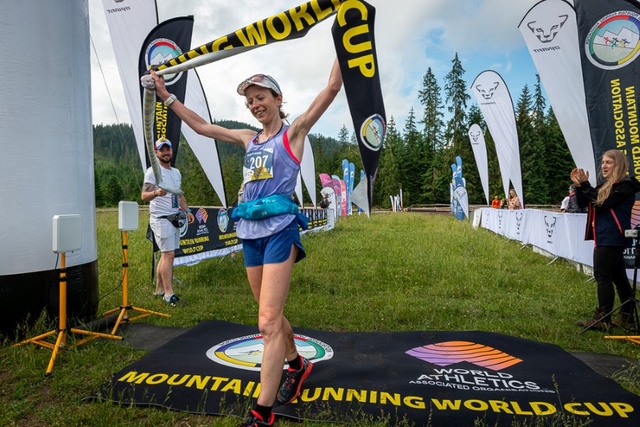
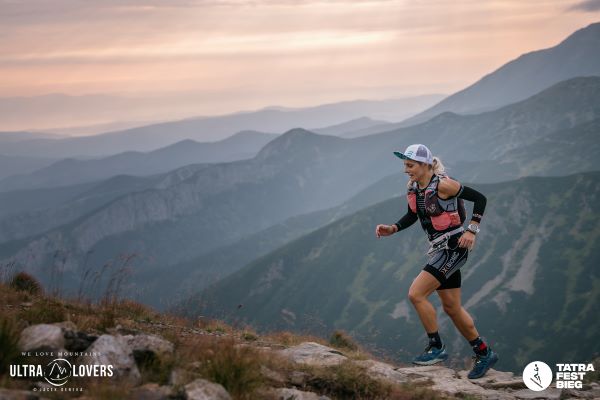
The women’s race was close at the front, with Alice Gaggi and Charlotte Morgan exchanging the lead. In the end it was Charlotte Morgan who came out on top, winning in 2.46.03. Alice Gaggi was just a minute behind in the end (2.47.12), followed by Polish runner Iwona Januszyk in third (2.50.51). Lorenza Beccaria was close behind in 2.51.36, then there was a gap to fifth placed Lucie Marsanova from the Czech Republic (3.06.56) and local runner from Zakopane Katarzyna Jakiela-Rzadkosz was sixth (3.07.35).
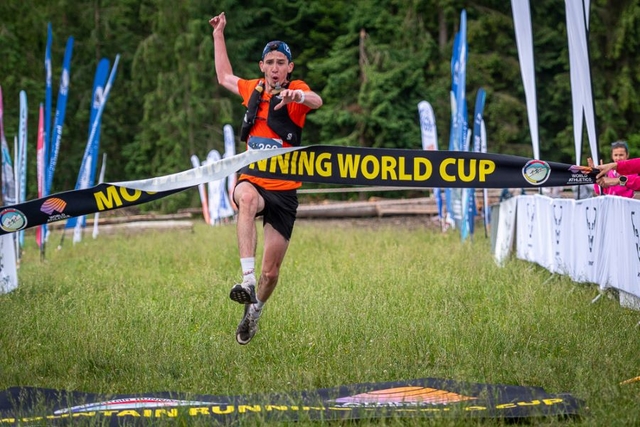
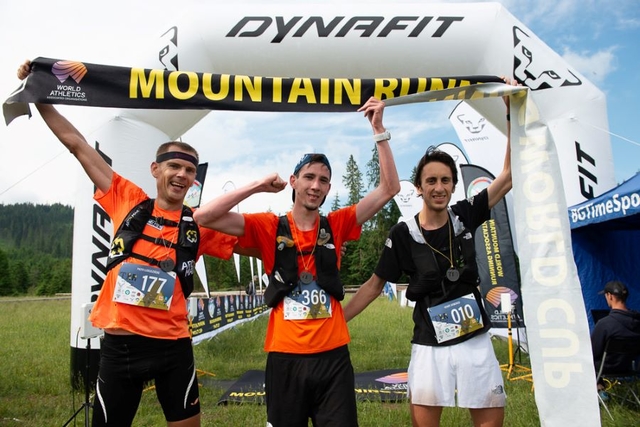
Tatra race image 2 webIn the men’s race exciting young Polish talent Marcin Kubica led from the initial stages through to the finish, winning in 2.18.51. He’s taken part in 3 World Championships and 2 European Championships as a junior and it will be exciting to see him taking part in more races this year. He was chased by compatriot Piotr Lobodzinski, who is probably best known as two-time world tower running champion. Piotr finished in second in 2.20.21, with Vertical Kilometre champion Henry Aymonod third in 2.21.40. Martin and Bernard Dematteis finished in fourth and fifth respectively in 2.23.23 and 2.24.20, with Sandor Szabo sixth in 2.25.34.

Full results at: https://bgtimesport.pl/online/open/zaw_id/510/bieg/TRR

After so long without a World Cup race we are thrilled to be able to bring you races again. Next stop is Grossglockner in Heiligenblut, Austria on 11th July. Over the years this event has brought us some incredible racing and we look forward to experiencing it again.

See full World Cup calendar at: https://www.wmra.info/calendar/2021-major-events

All photos credit Marco Gulberti
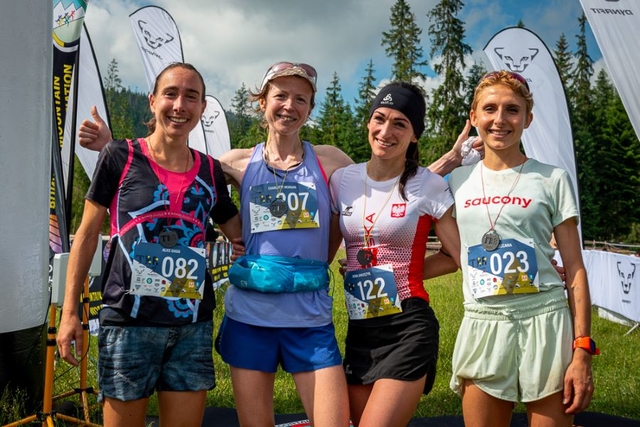
Tatra race w podium web

Tatra race m podium web

Announcement from World Masters Mountain Running Championships

We’re pleased to say that we’ve received confirmation that the 2021 World Masters Mountain Running Championships is on. The event will take place, as planned, from 3rd to 5th September, at International Schlickeralmlauf in Telfes in the Stubai Valley.

Here’s a statement from the organiser:

“At the moment we have a good situation in Austria/Tirol and we are happy to finally plan the event.

We can inform the runners that nothing stands in the way of hosting the Masters World Championships. Testing or vaccination will certainly be necessary, and the possibility of testing will be offered in Telfes. Registration is risk-free for the athletes. Should the event have to be cancelled for whatever reason, the entry fee will be returned in full. We are very pleased to be able to present Telfes in the Stubai Valley again at the centre of mountain running events.”

For more information: https://www.stubai.at/en/schlickeralmlauf/

World Cup 2021 Kicks Off At Tatra Race Run in Poland

Following a 2020 mountain running season highly effected by the global pandemic, excitement is high for the launch of the 2021 World Cup in Zakopane, Poland. It was impossible for a World Cup to take place in 2020, so we haven’t seen a World Cup race since Smarna Gora Race in 2019. But the organisers of the 16 stages are primed and ready, the athletes are itching to race and we at the WMRA can’t wait to bring you all the news, live action and results. Let us tell you about the race that will kick it all off on June 27th, Tatra Race Run.

 Tatra Race Run takes place in the Tatra Mountains, an area with a rich history of mountain running. In fact, the Tatra Mountain Walk, which took place in 1925, was the first mountain run in the republic of Poland. Tatra Race Run is inspired by another historical event – Tatrza?ski Chod – so the organisers will be taking all the best historical features and combining them with the fast and furious world of contemporary mountain running. 

TatraRR2

The Tatra Mountain range is the highest mountain range in the Carpathian Mountains, which spans Poland and Slovakia. The area is renowned for skiing, mountaineering, walking and running and is a dream for those who love spending time in the mountains. Zakopane is in the south of Poland, approximately 85 kilometres south of Krakow.

Athletes will compete on a route of 24 kilometres with 1700 metres of positive elevation. The course will take the runners along the Tatra paths and ridges from Zakopane to Ko?cielisko. They will start at Ku?nice and run through the Kondracka Pass and Czerwone Wierchy to the Tomanowa Valley and the Hala Ornak, and then through the Iwaniacka Prze??cz, the Starorobocia?ska and Chocho?owska Valley to the finish line at Siwa Polana.

As well as a stacked field of local mountain running talent, which we’re looking forward to seeing, international runners who will be among the favourites include: Sarah McCormack (current women’s World Cup champion),  Bernard Dematteis (4th in the 2019 World Cup), Martin Dematties (7th at the 2019 World Cup), Alice Gaggi (2013 World Mountain Running Champion), Lorenza Becaria (number 10 in the current WMRA World Ranking), Henri Aymonod (Italian VK Champion 2020), and exciting young talents Cecilia Basso and Raul Criado (Spanish national U23 champion).

Programme:

SATURDAY June 26, 2021

12.00-20.00 registration, Dynafit Store, Krupówki 40 Shopping Center, Zakopane

SUNDAY June 27, 2021

6:30 start, Ku?nice

13:00 finish line closes – Siwa Polana

15.00 award ceremony, Krupówki 40 Shopping Center, Góralski Browar – Zakopane, Krupówki 40

How to follow the action:

We will be bringing you the latest news and results on our social media:

www.instagram.com/wmramountainrun

www.facebook.com/worldmountainrunningassociation

www.twitter.com/wmramountainrun

#WMRAWorldCup


“I’ll Never Forget The Joy I Felt”

In our next athlete story Fujio Miyachi of Japan tells us about his full commitment to the World Cup and the thrill of earning his first national vest to compete at the World Championships.

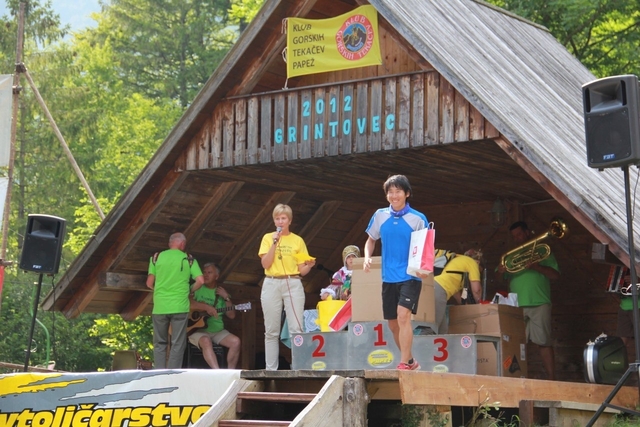
 2013 was an unforgettable year for me. In 2012, I competed in “Tek na Grintovec” and I could not forget the rigors of the World Cup, but more importantly, the excitement of the experience.

I was eager to challenge in a race on the world stage again and wanted to participate in a series of races instead of just one. The WMRA Grand Prix (as the World Cup was known then) had six races including the World Championships in 2013.  I decided to take part in all six races that year, starting with the first race in France in June, but this year I especially wanted to compete in the World Championships in Poland in September.  Because the World Championships needed to be represented by each country, I needed to be selected by the Japan Association of Athletics Federations (JAAF). However, at that time JAAF did not have selection criteria (e.g., qualification standards) for sending mountain runners as a national team member.  So, I went to the JAAF with my results to consult directly with them.  One day in late July, I received an email from the JAAF confirming my participation in the World Championships, perhaps because of my 17th place finish in the World cup in Slovenia in July.  I was actually in Poland at that time to prepare for a big mountain running race, the World Long Distance Championships.  It was a pretty strenuous trip, as I had run the World Cup races in Italy and Slovenia and then headed right back to Poland.  However, I wasn’t sure if I would be selected as national team member for the World Championships, and so I was bouncing around in Europe as much as I could. Fortunately, JAAF informed me that I would be sent to Poland, so I decided to take it easy and spend my time there.

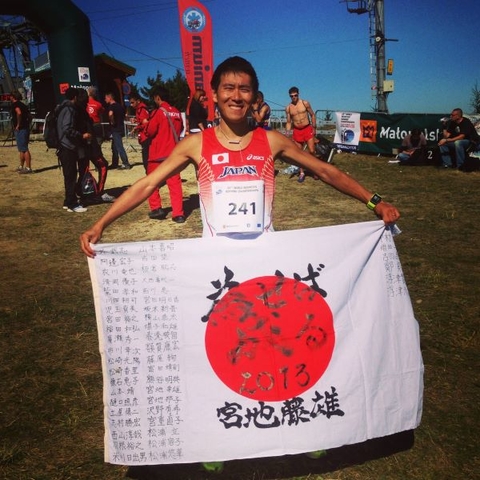
As the World Championships in September approached, the JAAF send me my first national kit.  I’ll never forget the joy I felt when I held it in my hands and put on my vest for the first time. Above all, I felt a sense of accomplishment that my challenge had finally been recognized. Of course, there were always strong competitors from many countries.  I was a challenger.  I just had to do my best.  I felt an inexplicable sense of tension, but much more than that, I was very happy.

When I arrived at the local airport in Poland, I was greeted by a car.  It was late at night when I arrived, but I was warmly welcomed by a local staff member holding a sign for the race.  I went to the hotel and went to bed immediately.  The next day and the next few days were dedicated to the World Championships.  It was very hectic and there was a lot to do during those days.  Prior to the race, I had to check out the race course, confirm the registered race wear for any discrepancies, read the regulations, and attend the Technical Meeting and WMRA Congress.  If I had been a member of a big team, it would have been normal for the team staff to attend these meetings.  However, because I was a member of Japanese team with only a few athletes, I had to attend all meetings by myself in order to get the necessary information.

Fujio 3 small

The night before the race there was the Opening Ceremony.  We went to the center of the town, lined in an alphabetical order, and marched by country.  Each country’s runners were greeted with many cheers from the gallery.  On the day of the race, I ran as hard as I could to live up to their expectations.  The course that year was a circuit of 3 to 4 kilometers per lap.  A special course was built on the top of the ski resort slope to make a loop, which made it easy for people to cheer.   As the laps went by, the number of runners decreased little by little due to injuries.  As I passed them, I held on and kept running.  My result was 86th place.  There was no limit to how far I could go, but I did the best I could at that race.  At the finish line, I was warmly welcomed by a volunteer interpreter who had been arranged by the race organizer.  The night after the race, I took part in the closing ceremony.  After the ceremony, we all had a buffet style dinner where we exchanged our own national team kit and soaked up the aftermath of the race.  The highlight was afterwards.  A dance party started at the venue and it was a big hit.  I was so surprised to see it because I couldn’t understand where their energy came from when they were supposed to have given it their all in a race.  At the same time I think I caught a glimpse of their strength.  They were really tough.  I was proud to have been able to run with these special runners, and I renewed my determination to run as well as they did.

Fujio 1 small

The week after the World Championship, I went to Austria, where I competed in the fifth round of the World Cup.  I finished the race in 20th.  And then, I took part in the final round in Slovenia after returning to Japan for a while. I completed that race in 22nd place.  I had no outstanding ability.  However, this year I was able to compete in the World Cup and ranked in 23rd overall.  It’s a great thing that there is a way to challenge yourself.  I would be happy if more people knew that mountain running is such a way to challenge themselves.

Remembering Bibi Anfang

 We are sad to bring you the news that Bibi Anfang, pioneer of mountain running and founder of Hochfelln Berglauf, has died. Jonathan Wyatt, President of the World Mountain Running Association, would like to say a few words about him in tribute, below. 


Today it is right to remember Bibi Anfang and all he has done for Mountain Running and his passion for the sport. As the president of the local ski club in Bergen he had the vision to host a Mountain Running race on the same ski slopes that is used in winter for the club races. The Hochfelln Berglauf is now one of the most historic and still prestigious Mountain Races.

My first meeting with Bibi was an invitation to travel to Bergen in Bavaria and Germany for the race. It was my first ever mountain race in Europe and I arrived at the train station with only his business card. It was enough to show this card to the person that I got off the train next to and I was taken direct to the house and hosted by the generous hearted Bibi. He was always the most passionate organiser where he firmly believed in the traditional values of tough racing on a track that stayed the same for every edition of the race preserving its history. Displaying local culture and celebrating the history of the race with the names and photos of all previous winners was always a feature of the race and we always loved having Bibi in traditional lederhosen handing out the prizes.

Bergen hosted the World Mountain Running Trophy in 2000 and Bibi pulled together the community to put on a fantastic event. My personal highlight was being a part of the bronze medal New Zealand team and seeing our New Zealand Women’s team win gold at the event. Bibi was as ever involved with every detail including making sure the traditional finish chute (that is so steep you need to climb up with your hands!) was kept intact. He was instrumental in forming what we now know as the World Cup for Mountain Running joining together his race in Germany with races in Austria, Switzerland and Italy to form the first ever Grand Prix. Later in 1999 he helped it become an official part of the World Mountain Running movement.

He was so often making jokes and we both used to laugh as we did our best to understand each other. Me with my (few) few words of German and Bibi in his thick Bavarian dialect. We always managed to understand what we wanted to say to each other in the end! We will all sadly miss Bibi and his enthusiasm for our sport and on behalf of all the runners that competed at the Hochfelln Berglauf and on behalf of everyone at the World Mountain Running Association I would like to give our condolences to his family and the people of Bergen.

Jonathan Wyatt
Hochfelln Berglauf Record Holder and WMRA President


Message from Honoury WMRA President Bruno GOZZELINO

As WMRA Honorary President, never will we forget Georg “Bibi” Anfang,
It is for me a very sad news to know that “Bibi” Anfang passed away.
Never I will forget him, specially his enthusiasm and his passion for sport and in particular for the mountain running sport.
I spent many time of my life for mountain running and the same thing was for “Bibi” Anfgang: the work in favour of mountain running made together was important and I believe that all the people of mountain running will agree!
Hochfelln Berglauf is a now race in the history of athletics, in the history of mountain running.
I wish to give my condolences to his family and the people of Bergen.  Bruno GOZZELINO

Scan 17

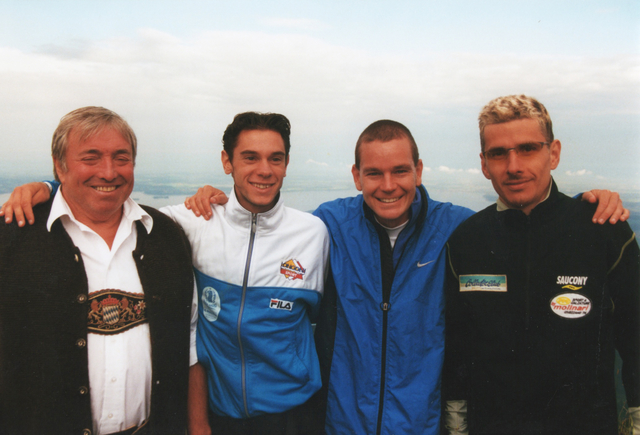
Photo: Bibi Anfang, with 3 World Mountain Running Champions: Marco Degaspari (ITA), Jonathan Wyatt (NZL), Antonio Molinari (ITA)

“I Disliked All Sports At School”

In our next athlete article Fujio Miyachi tells us how he went from being a child who hated all sports to embracing mountain running!

This is the starting point of my career as an athlete. This story is well known to my friends from primary school. To begin with, I was not very good at exercise, and on days when I had a PE session in the school, I would get headaches and stomach aches for no reason.

 But there was a turning point in my life when I came to love exercise. My first turning point came in my third year of junior high school. Every year in the Fall, my school organized a 20k race. For the first two years after I started to take part in it, I was at the back of the pack of all three grade’s students.   But I wanted to change the fact that I was no good at any sports by the end of the junior high school days. So, in my last year of junior high school, I decided to run a little bit every day for a month before the race. Thanks to this training, fortunately, I was able to finish in the middle of the pack (I definitely don’t remember ranking). This experience made me realize that even if I am no good at something, I can improve by working at it.

Then I had another turning point, Ontake Sky Race in 2006.

fujio8 ????As it was a part of SkyRunning World Series, there were 20 international runners from Europe and the United States among the 200 runners in the field. I was overwhelmed by their performance. It was at this race that I became fascinated with mountain endurance sports and realized that the only way to compete with international runners was to go out and compete in global races. Since then, I have taken part in various trail running races around the world.
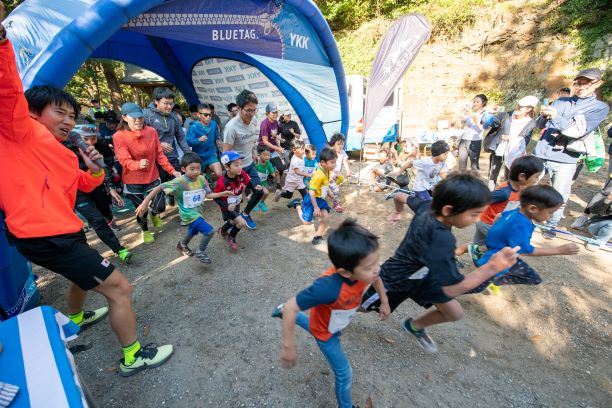
Of course, I am always trying as hard as I can but I started running in the mountains at the age of 27, which is definitely late. So, I feel inferior to other runners who started running at an earlier age. I started to take sports seriously after I had grown up to a certain extent, and so I lacked important capacity as a professional athlete. Firslyt, I didn’t have athletic experience as a base. This lack of experience has led to a lack of adaptability. Also, I lacked the ability that can be honed by working on various types of training from a young age. After all, I didn’t start sports seriously until I was in my twenties. I don’t have great reflexes, but I’ve managed to do mountain running to a reasonably good level because I realize that I don’t have abilities that other runners have. I don’t have many options to begin with. I’m lucky to have found mountain running that I can get into and I have a chance to win.

If we want to leave a rich future for our children, we should give them many experiences from a young age, not just sport. It`s good for them to go to various places and interact with many people. In any case, I believe that having a variety of experiences will become an asset and lead to better choices later on. In this sense, mountain running is a great experience because we can enjoy nature and sport at the same time.

Looking back on my own experiences, I want to maximise the possibilities for children by experiencing sport from an early age. In addition, I would like to tell them the following tips:

?It is never too late to take on a challenge at any age, if they want to do something to challenge themselves.
?It is important to have a variety of fun and values in running, not just running fast or long.
?It is important to enjoy everything with curiosity.

I didn’t like exercise when I was young, but I had the chance to compete with international runners when I encountered “running”. So, I am more passionate than anyone else about teaching children the importance of exercising at an early age, and I want to actively pass on the know-how and ideas I have gained to them. With this in mind, I have been organizing an annual event called the “Junior Trail Running Series” in Japan, as well as training sessions for junior runners to foster the next generation and spread awareness. I would like to introduce the details of this program in the next article, but it has been going for more than 10 years and has attracted more than 10,000 participants.0107 original

As a side note, since last year, it has been difficult to hold these races in Japan due to the COVID19 pandemic. Of course, we had to observe the infection status, but nevertheless, we have been able to organize races relatively consistently from last year to this year because of the various measures we have taken, the trust we have built with the local communities, and the fact that the races are divided by age group, which makes it easier to control the number of participants.

From my next post, I will talk about what I tell the juniors and what kind of training I do with them, and I will talk about how I organize the races.

Tragedy at Race in Gansu Province in China

Everybody at the WMRA is incredibly saddened to hear of the tragedy which occurred at the 100k race in Yellow River stone forest near Baiyin, Gansu province, China. A reported 21 runners died when sudden, extreme weather occurred, which was not forecast, in a high altitude section of this mountain race. It is understood that hail, freezing temperatures and high winds came in suddenly and dramatically, and a complicated rescue mission for runners ensued. 

We would like to extend our sincere condolences to those families and friends affected by this terrible tragedy, as well as the Chinese trail and mountain running community who must be shocked and deeply affected. There are news reports in the international running media (see here) and we await to hear further details of the findings of investigations. Our thoughts are with our friends in the sport in China.


Perspectives on Sustainability: Part One

Our latest guest article comes from Kasie Enman, member of the WMRA  Athletes’ Commission. Kasie is passionate about promoting environmental sustainability in our mountain running community and this is the first of a series of articles on the topic. 

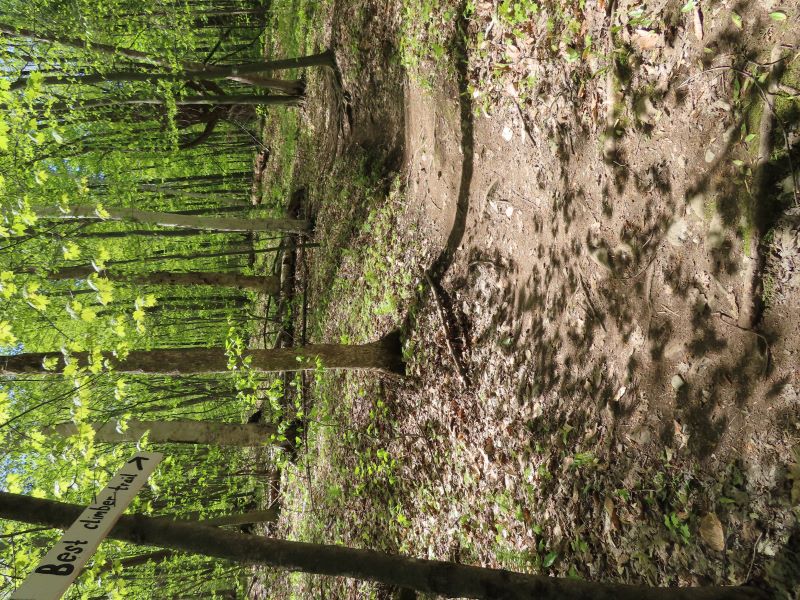
 As mountain and trail runners, we have a more intimate relationship than most with the land we call our playground, the wildlife we share paths with, subtle changes over seasons and years. As we pass through the landscape, it is easy to get caught up in our own narrow perspective. In the springtime, I’ll cover miles of trail focusing on the forest floor, searching intently for morel mushrooms or the pop of color of an eastern red newt. Other times I am overwhelmed by the immensity of life I know is all around me, much of it hidden from my view, camouflaged into the surroundings. I try to remind myself often of the value of changing perspective, looking at the world through a broader lens. This is not to say that one perspective is better than another. What I want to take this opportunity to share is the importance of noticing the small things, the big things, the in-your face things, the hidden things – the whole system.

Kasie small 2There is this concept called the principal of self-organization that I had the great fortune of learning from professor, author, and ecologist Tom Wessels that he describes in this way: “As a system grows, it doesn’t just get bigger, it gets more complex and that complexity is derived from the parts of the system becoming evermore specialized and tightly integrated together such that each part, doing what it needs to do to sustain itself, creates conditions that sustain the whole. As a result, these self-organizing systems grow increasingly resilient, stable, and efficient.”

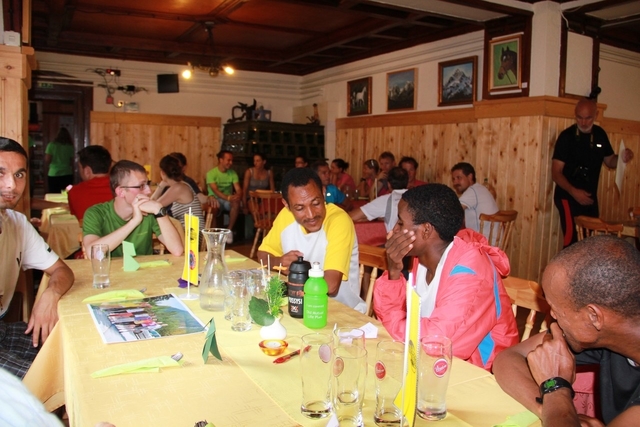
I think of us, mountain and trail runners, as a highly specialized part of the mountain ecology system. We are “tightly integrated together” with the land, the plants and animals that call that land home, the waterways that run through it, the communities that host and organize races, and so much more. We need the mountains for joy, health, a place to strive together toward our goals. And in the face of climate change and environmental crises, the mountains need us to advocate, be stewards, and “create conditions that sustain the whole.”

Over the coming weeks, I’ll be sharing some stories of environmental stewardship and systems thinkers from our mountain running community. These articles and posts will take the perspective of race organizers, federations, trail builders, and trail blazers. Along the way, I would love to hear your perspective. What actions can you take to promote resilience, stability and efficiency in both yourself and the environment? How can the WMRA help support environmental sustainability in our sport? Who are the role models for environmental advocacy and land stewardship in your community?

Dipping A Toe Into The World Cup

We asked Japanese runner and member of the WMRA Athletes’ Commission, Fujio Miyachi, to tell us about his first experience of running in a World Cup Race, Tek na Grintovec in Slovenia. So if you’re thinking of dipping your toe into the World Cup, or mountain running races this year, read on…

I started to take part in mountain endurance races in 2006.  Frankly speaking, I did not know it as “Mountain Running” at that time (of course, I guess that most Japanese runners didn’t know it either).  So, at first, I took part in “Trail Running” races in the Asian region and North America in places such as Malaysia, Saipan, Hong Kong, Hawaii, Colorado, Oregon and Utah as well as Japan.  A turning point came at a trail running race at Colorado in 2011.  I found a leaflet placed at the exhibition booth of the race venue. It was a newsletter from the World Mountain Running Association, and national mountain runners from the World Championship in Slovenia in 2011 appeared on the cover page.  I was fascinated about this competition with international runners.  So, I didn’t even know what “Mountain Running” was, but immediately decided to try it. The stage for this challenge was the Mountain Running World Cup “Tek na Grintovec” held at Slovenia in 2012.  This was my first time in Europe.

Different counties have different cultures, including in event organization and its atmosphere. I was particularly surprised by the race briefing the day before. International runners had to have a dinner and race briefing together.  During the briefing, each runner was called up by the organizer to receive their race number bib.  It wasn’t formal, it was pretty casual so that every runner enjoyed the dinner with their family.  Obviously, the majority of the runners were European runners there who knew each other, probably because they had often run together in other races.  They were also kind to the minority such as me too.  After the briefing, we had to sign a document for a doping test agreement.

2020 04 30 22.40.26

The World Mountain Running Association supports the anti-doping policy as an obligation of international sport.  It was the first time I encountered the issue of doping in a race.  All the trail running races I had participated in before didn’t require me to take a doping test.  When I decided to race in the World Cup of mountain running, I started to go to a sports clinic near my house in order to consult with a doctor who had good knowledge of doping issues and worked for the Japanese national teams of tennis and sailing.  Also, because I suffered from severe asthma when I was a child, I started to pay attention to the medicines I was prescribed, the food and drink in my daily life since then.  So, I believed that I was prepared, with medicines checked.  Nevertheless, it was still a shock to encounter the reality of anti-doping controls at international competitions.

“Tek na Grintovec” was a really tough race that went up 2000m in 9km.  I ran up a relatively gentle hill in the forest for a few kilometers after the start, and had to climb up the very steep and rocky slope when I entered the trail head. I just kept climbing up towards the top of the mountain past the hut located at the halfway point by chasing a runner ahead.  Generally speaking, European runners are big and have long legs.  When I ran at the same pace as they did, they could move farther than me.  So, it was hard for me to chase such big European runners.  Even among such European runners, of course, there are smaller ones.  I was so surprised to see that such small runners climbed up so lightly like antelope.  They made the best use of their own physical characteristics and carried themselves easily with high flexibility.  After the competition with all these runners, finally, I somehow crossed the finish line.  However, another race was starting again immediately.  At the 2000m height of the mountain, the temperature dropped by about 12 degrees, and on the ridgeline, the perceived temperature also drops considerably.  I did not care about the cold temperature during the race because I was concentrating on running.  However, after the race, I suddenly not only realized the strong wind and the cold weather but also became afraid of hypothermia.  So, I went down quickly together with other runners who had finished.  The result of my first race was 28th place in 1 hour and 44 minutes. I was drawn in by this sport, because of the powerful European runners with great dexterity as well as the warm supporters with enthusiastic cheering even on the steep mountainside.  This is the memory of my first World Cup.

2020 05 03 18.55.15

In this race, I met a person who would become indispensable to me.  Tomo Sarf has been a council member of the World Mountain Running Association for many years and is widely known globally by everyone as father of Slovenia’s mountain running community.  Since then, I have met him every year at the World Cup and other races in Slovenia. He was really kind to me, as were the other council members and the international athletes.  He helped me to communicate with the race organizers and book hotels near the race venue.  For me, as somebody who has to travel from Japan every time for the race, he is like a family member in Slovenia.  

Unfortunately, “Tek na Grintovec” ended in 2019 with the 20th edition but I would love to climb it again.

Cancellation of European Championships and International U18 Cup

Unfortunately we have to bring you the disappointing news that the decision has been made to cancel both the European Mountain Running Championships and the International U18 Mountain Running Cup this year. Both had been postponed from 2020, in the hope that the situation would have improved by now.

The organisers of the European Championships, which would have taken place in Cinfaes, Portugal, said: “The pandemic situation is still ongoing in Europe and, even if the situation is currently getting better in Portugal, the conditions are still uncertain and challenging and would not allow the event to be delivered to the expected level.”

The International U18 Mountain Running Cup would have taken place in Ambleside, England. There is still hope of some sort of limited competition there. The organiser, Duncan Richards, said:

“Due to the ongoing uncertainty regarding Covid it has unfortunately been decided to cancel the WMRA U18 Cup due to take place on 24th July. The organisers are planning on holding an invitational event for home countries teams using the course etc on that day, so ensuring the GBR athletes have something to aim for. The viability of the event being an open invitational for athletes from countries outside the UK is being explored however athletes/coaches would have to take their own responsibility for travel and accommodation arrangements – anyone interested in being kept informed of this possibility should register their interest with the Organiser“.