
This weekend the World Cup heads to Switzerland for the biggest mountain race of them all, Sierre-Zinal! This is our next long distance mountain race, at 31km with 2200m of ascent, and it traditionally attracts the most competitive field of all the World Cup races. This year is no exception. We take a look at the history of this event and preview the elite fields this year.
So what makes Sierre-Zinal such an iconic race? Most mountain races have a lot of history behind them but this is the 48th edition of this race. Since its creation in 1974 men and women have raced over the same distance here, and as we’ll see the results list reads like an international who’s who of mountain running.
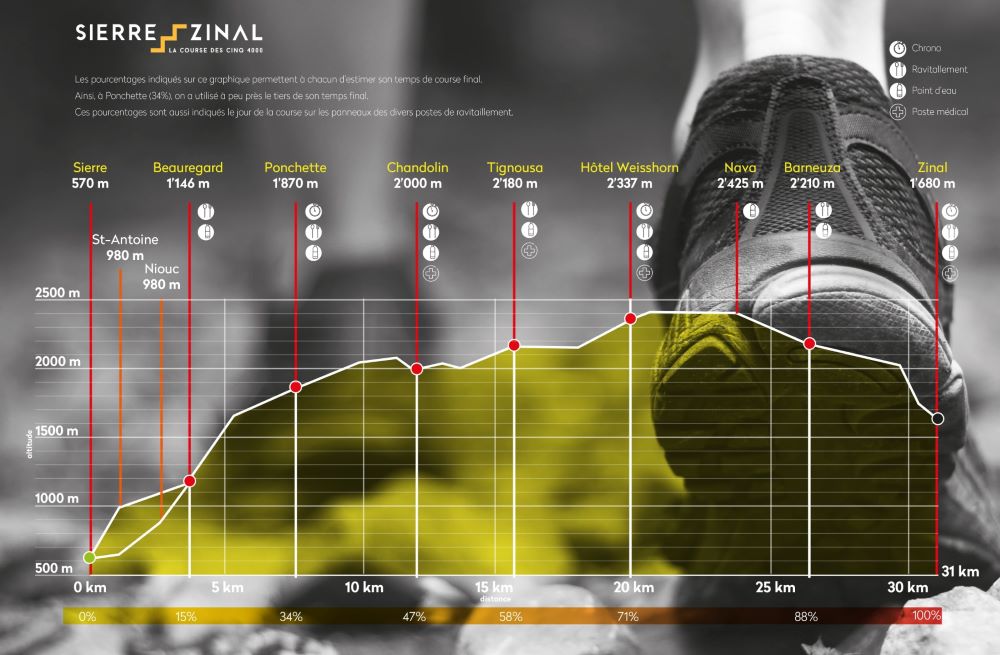
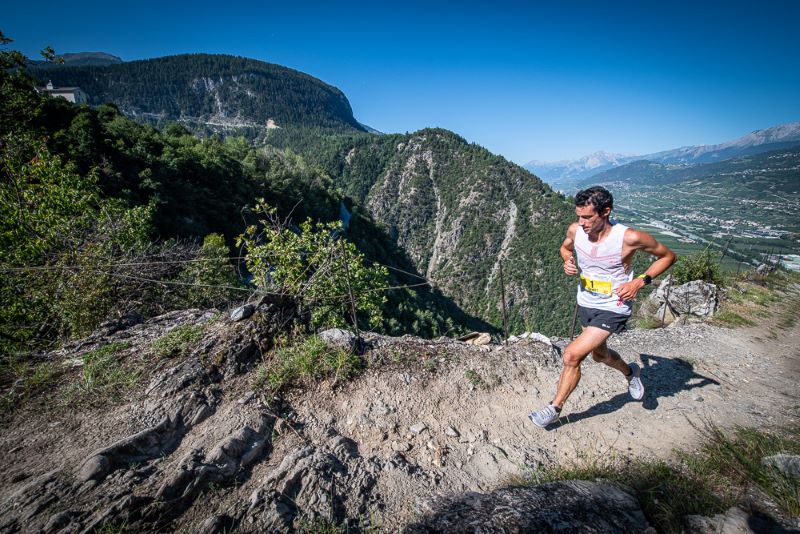
The route itself is iconic. It’s known as ‘la course des cinq 4000’ because the runners get to enjoy views including 5 peaks over 4000m along the way (Weisshorn (4506m), Zinalrothorn (4221m), Obergabelhorn (4073m) Matterhorn (4478m) and Dent Blanche (4357m)). Athletes start in Sierre at 570m and then climb up, up, up to the highest point at 2425m at Nava over the course of 24km. Then the final 7km is downhill, culminating in a frantic sprint through Zinal to the finish line at 1680m. It’s a tantalisingly runnable, fast course, which as we know results in some very exciting racing.

This race draws top international runners back year after year, in pursuit of one of the biggest accolades in mountain running. From 1979 to 1982 Pablo Vigil (USA) won 4 in a row. In the women’s race Veronique Marot (GBR) won 3 out of 4 between 1984 and 1987, then Isabella Crettenand-Moretti (SUI) was unbeaten between 1995 and 1997. In 2001 Ricardo Mejia (MEX) won his first of 3 races, but his dominance was interrupted by Jonathan Wyatt (NZL) in 2002 and 2003, who set the record of 2.29.12 which was unbeaten for 16 years. In 2006 Anna Pichrtova (CZE) began her 4 year reign, setting the women’s record of 2.54.26 in the process. This record would also endure for 11 years.
 But by far the most dominant male athlete here has of course been Kilian Jornet (ESP) who has won an incredible 8 times. He finally beat the record set by Jonathan Wyatt at an unbelievably exciting 2019 race, running 2.25.35. Lucy Wambui (KEN) has won 3 times in recent years (2015, 2017, 2018) but it was Maude Mathys (SUI) who finally smashed Anna Pichrtova’s record with a stunning run of 2.49.20, also in 2019. Will these records stand after Saturday’s race? Let’s take a look at the fields.
Elite women
(Please note that the elite start lists may be subject to change due to the travel situation)
As the winner in 2019 and 2020 Maude Mathys (SUI) has to be the favourite. In 2019 she broke the course record which had stood for 16 years. She has won the Mont Blanc Marathon and Olla de Nuria this year and she was also the winner of the 2019 European Mountain Running Championships. She’s 4th in the current World Ranking.
Lucy Murigi (KEN) is our current leader in the women’s World Ranking. World Champion in 2017, 2nd in World Cup 2019 final standings, she’s won La Montee du Nid d’Aigle and been 3rd at Grossglockner this year. She has won here 3 times – in 2015, 2017 and 2018 – so has to be one to watch.
Judith Wyder (SUI) was 2nd here in 2019 and also went under the long-standing course record. She is a two-time winner of DoloMyths, most recently this year, and will definitely be another ‘local’ to keep an eye on, as will Simone Troxler, 3rd here in 2018.
Anaïs Sabrié (FRA) was 2nd in last year’s more low-key event and 5th in 2019. She recently came 3rd at La Montee du Nid d’Aigle and 2nd at the Marathon du Mont Blanc a couple of weeks before that. Compatriots Blandine L’Hirondel and Elise Poncet could also do well. L’Hirondel was 3rd at this year’s Marathon du Mont Blanc, won the 2020 French Mountain Running Championships and was 3rd at the World Long Distance Mountain Running Championships in 2019. Poncet was 6th at La Montee du Nid d’Aigle this year, 3rd at Trofeo Vanoni in 2020 and 2019 and 2nd in the World Championships 2019.
 We’ve seen a number of the runners taking part already do well in World Cup races in the last couple of months. Charlotte Morgan (GBR), our current World Cup leader, who was 11th here in 2019 will be taking part and is clearly in form. Marcela Vasinova (CZE), 2nd in our current World Ranking, was our winner at the recent Tatra SkyMarathon and was 2nd at this year’s DoloMyths race. Lorenza Beccaria (ITA) was 5th at Grossglockner and 4th at Tatra Race Run. She was also 2nd at FlettaTRAIL 2020 and 10th at the weekend’s Piz Tri Vertikal. Alice Gaggi (ITA) finished 2nd at Tatra Race Run and 7th at Grossglockner Berglauf and has finished in the top 10 of most top Italian races during last couple of years. She’s lying 6th in our current World Ranking. Lucie Marsanova (CZE) has taken part in 3 out of 4 World Cup races this year, with a best result of 5th at Tatra Race Run. She was 5th in the 2019 World Cup final standings. Lastly, Timea Merenyi (HUN) has also taken part in 3 out of 4 of this year’s World Cup races, with a consistent showing of 10th, 11th and 12th. She was 10th in the final World Cup standings in 2019.
Our current women’s World Cup reigning champion, Sarah McCormack (IRE), will be starting a World Cup race for the first time this year. She was 13th here in 2019 and will be looking to build on that. Other runners to watch include British runners Holly Page, who is always a strong performer at any distance and was 8th here in 2019, and Emma Pooley, 3rd at last year’s race and former elite cyclist, turned runner, duathlete and triathlete. There are some strong runners from the USA including Katie Schide, who has won the Mont Blanc 90k, and been runner up at the CCC, and Brittany Charboneau, winner of Pikes Peak 2020 with a marathon PB of 2.33. From Spain we have Oihana Kortazar, a former Skyrunning European Champion and World Series winner who won Canfranc Marathon and Marathon Pirineu last year, and Sara Alonso, 2nd at Canfranc Skyrace 2020. Julia Bleasdale (GER) was 4th at last year’s Sierre-Zinal and Julia Combe (FRA) 8th at this year’s La Montee du Nid d’Aigle.
Elite men
(Please note that the elite start lists may be subject to change due to the travel situation)
8-time winner and record holder Kilian Jornet (ESP) returns and must be the men’s favourite. But he will face significant competition from a very deep field.
There are many returning runners who have already performed well here. Petro Mamu was 2nd here in the highly competitive 2019 race and he just showed that he’s in form by winning FlettaTRAIL last weekend. Juan Carlos Carera (MEX) was 4th here in that 2019 race, in a time that would have won it many years. Andrew Douglas (GBR), our reigning World Cup men’s champion (from 2019), was 6th here in 2019 and will be looking to improve on that. Fellow Brit Robbie Simpson is always one to watch here, having finished 2nd in 2018 and 5th in 2019, as well as coming 3rd in the World Championships in 2015 and 2nd in the European Championships in 2014, showing real consistency.
Marc Lauenstein (SUI) is a former winner (from 2013) and this distance suits the strong uphill runner. He won Pikes Peak in 2014, Marathon du Mont Blanc in 2015, and showed his versatility by winning the 3 Peaks Race, Giir du Mont and Matterhorn Ultraks in 2016. He’s also won 4 consecutive Trail de Ventoux races. Can he regain that form this year? Davide Magnini (ITA) was winner of this year’s Italian National Mountain Running Championships (Up and Down) and was also 2nd at Mont Blanc Marathon. Has been 4th at Sierre-Zinal in 2020 and 10th in 2019. Rémi Bonnet (SUI) achieved a 3rd place here in 2020 and an 8th place in 2019. He was recently 4th at Marathon du Mont Blanc. Stephan Wenk (SUI) was 5th last year and 13th in 2019.
As ever, there is a very strong contingent of runners from Italy in both the men’s and women’s races. Henri Aymonod is our current leader of the men’s World Ranking and the World Cup standings, having finished 3rd at La Montee du Nid d’Aigle and 3rd at Tatra Race Run. He was the winner of last weekend’s Piz Tri Vertikal (and many other vertical races during the last couple of years). Francesco Puppi is fresh from a 2nd place at La Montee du Nid d’Aigle and currently lies 2nd in the World Ranking. Our runner up in the 2019 Long Distance Championships will be looking to improve on his 16th place in 2019, after having finished 4th in 2018. We know that Xavier Chevrier is in form because he won La Montee du Nid d’Aigle a few weeks ago. He’s also been 9th at the World Championships in 2019 and 3rd in the European Championships. Cesare Maestri was 5th at this year’s Grossglockner Berglauf, 2nd in our World Championships in 2019 and men’s winner of Challenge Stellina in 2020. In addition, Alex Baldaccini was 7th at Grossglockner Berglauf and 3rd at the Italian National Mountain Running Up and Down Championships. Italy could well feature on the men’s podium.
There are some strong French runners on the start line too. Sylvain Cachard had a very successful 2020 with wins at Smarna Gora and Trofeo Nasego and 2nd places at Challenge Stellina and FlettaTRAIL, putting him 4th in the current World Ranking. Thibaut Baronian won Canfranc Marathon in 2020 and other results include a 6th place at this year’s Marathon du Mont Blanc and a 3rd at Zegama in 2019 and Julien Rancon finished 4th at the recent La Montee du Nid d’Aigle. Lastly, Germain Grangier could surprise people here. He is better known for longer races (he won Madeira 85k Ultra in 2018 and Annecy MaXi Race in 2018 and 2019) but he’s fast over technical ground and came 4th in a very competitive Speedgoat 50k in 2019.
As in the women’s race, it’s great to see some great runners from the US on the start list, particularly after Jim Walmsley had such a great race in 2019. Hayden Hawks finished 6th at the 2019 World Long Distance Championships and he’s been winner of the 52k race at Broken Arrow (and many others at the 50k – 100k distance). Compatriot Andy Wacker was 3rd at Pike’s Peak last year and was the NACAC National Champion in 2019 and has achieved top 10 finishes at Mont Blanc Marathon and Zegama in 2019. They should both be really interesting to watch.
Other runners to watch will include Lengen Lolkurraru (KEN), winner of this year’s Grossglockner Berglauf, William Rodriguez Herrera (COL), 2nd here in 2015, Jacob Adkin (GBR), 10th in 2018 and European Champion in 2019, and Zak Hanna (IRE). This will be Hanna’s debut at Sierre Zinal but he’s had a string of top 10s at races like Grossglockner, Trofeo Vanoni, Chiavenna Lagunc and last weekend’s Piz Tri Vertikal.
Start times
Women’s elite race 10.30am
Men’s elite race 10.45am
Race website
https://www.sierre-zinal.com/




 arrived at the finish line at roughly the same time, again leading to equal coverage.
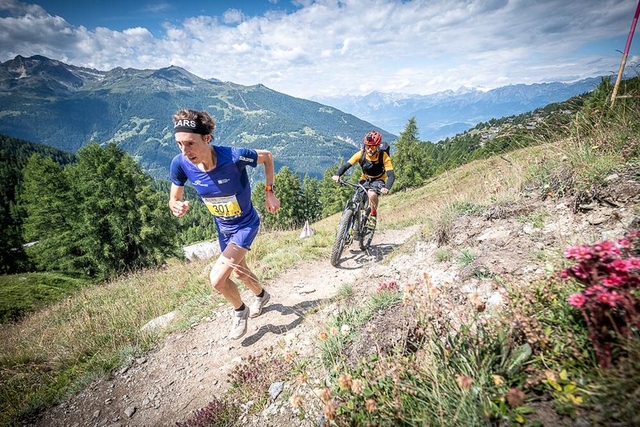
 In the early stages of the men’s race Kilian was biding his time, sitting in behind Remi Bonnet (SUI) and Petro Mamu (ERI) on the first climb. By the time they reached Ponchette Mamu, Kilian and Bonnet had struck out and were all together and this continued to Chandolin (12km). At this point Kilian decided that he was going to have to put some distance between himself and Mamu, so he dropped the hammer. In true Kilian style, even while hammering it downhill he was still smiling and chatting with the ebike riders manning the video cameras. He succeeded in striking out alone, opening a small gap, and Mamu was left in his wake, falling back a few places.
 Mathys continued to push hard and was absolutely dominating the women’s race. She laid down an unbelievably fast 1.55 split at Hotel Weisshorn, giving her a four minute lead over Nienke Brinkman. Sabrie was now five minutes behind Brinkman, but as the commentators kept telling us on the live coverage, both Brinkman and Sabrie may be faster on the descent than Mathys, so that last 7k of downhill could still make all the difference!
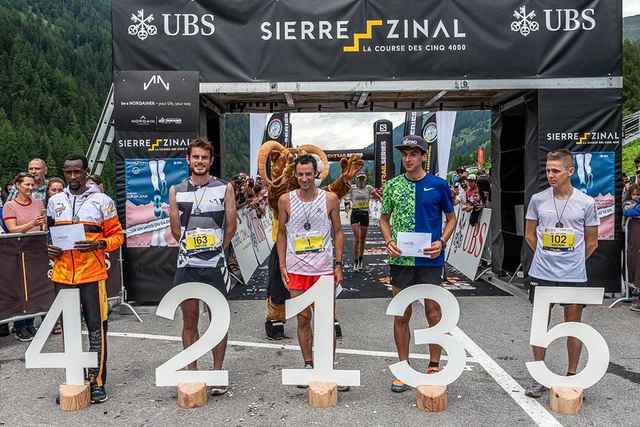
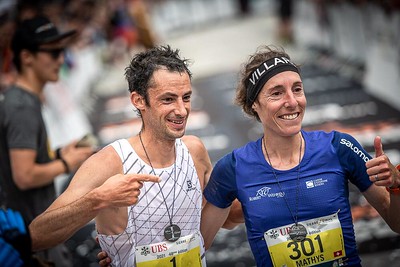 Shortly afterwards Kilian rounded the corner to take his ninth victory! It was a great touch that he was greeted by Mathys and they could celebrate together. Just 42 seconds after Kilian, Simpson claimed second place in the men’s race, his fourth runner-up spot here, but he proclaimed it his “best second” in his post-race interview. Brinkman claimed a huge second place in the women’s race too. A fantastic result and we’re excited about seeing her in more mountain races in the future. Sabrie and Maestri completed the men’s and women’s podiums.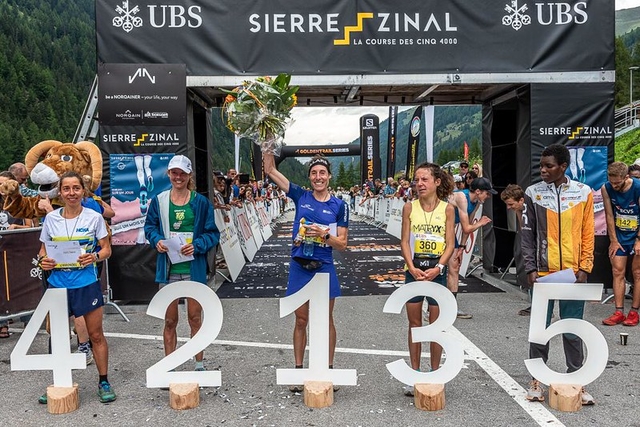


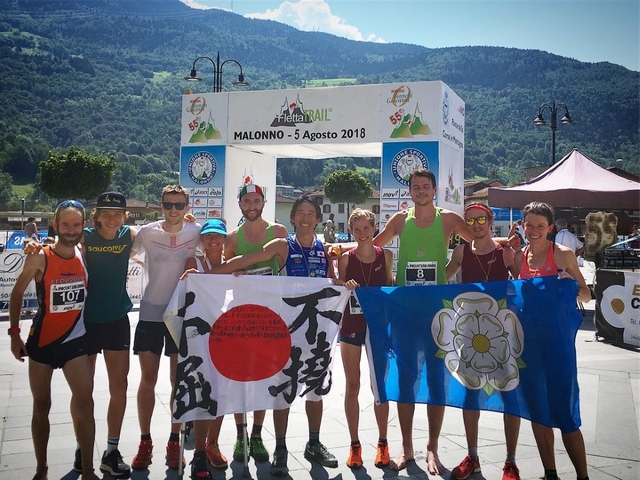 Before and after the World Cup race in Malonno, international runners (and elite Italian runners) live together in a former church convent on the hilly area of the town. The church that stands next to the runners’ dormitory is a symbol of the town and can be seen from anywhere in the town. Everybody in the town knows that the athletes are staying there, and so many children come to see them. In this town, the mountain runner is an idol for children. During the race season, international elite runners from all over the world gather there. These runners stay close to them, train, and chat. This may be the best time of the year for kids who love running in the mountains. Sometimes children come to visit at the dormitory with mischievous expressions on their faces. Some of them run away after saying hello, while others ask for autographs or photos. It makes the runners proud to respond to them.
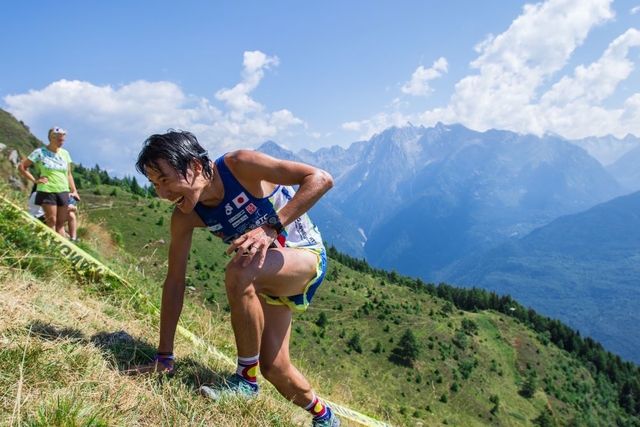 Tri Vertikal was held on Saturday in 2018. The first day’s vertical race was particularly spectacular, with a climb just before the finish that was over 40 degrees and required the athletes to crawl on their hands and knees. I couldn’t help but smile while climbing up.
 There is one more attraction of Malonno. That is the existence of the Mountain Running School. Every year at the beginning of autumn, children are brought together and taught by leading local mountain runners. Malonno has a comprehensive sports club, Unione Sportiva Malonno (U.S. Malonno), and one of its initiatives is the Mountain Running School, which was established in 2017. In fact, this is the model for the junior trail running club I started in Japan. It’s a good model where the elite runners perform in front of junior generations in the race, juniors dream of becoming such a mountain runner and the school provides training for them. Not only are the races great, but Malonno is also doing a great job of reaching out to a wide range of people so that mountain running can take root in the community.
 But by far the most dominant male athlete here has of course been Kilian Jornet (ESP) who has won an incredible 8 times. He finally beat the record set by Jonathan Wyatt at an unbelievably exciting 2019 race, running 2.25.35. Lucy Wambui (KEN) has won 3 times in recent years (2015, 2017, 2018) but it was Maude Mathys (SUI) who finally smashed Anna Pichrtova’s record with a stunning run of 2.49.20, also in 2019. Will these records stand after Saturday’s race? Let’s take a look at the fields.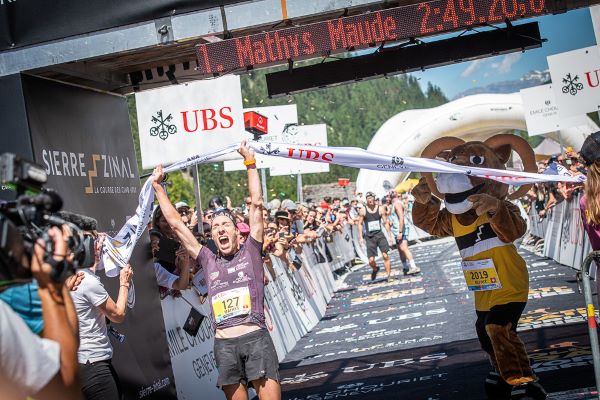
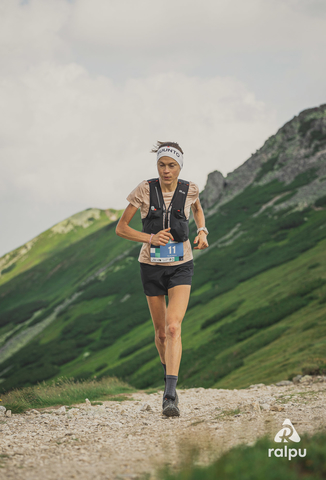 We’ve seen a number of the runners taking part already do well in World Cup races in the last couple of months. Charlotte Morgan (GBR), our current World Cup leader, who was 11th here in 2019 will be taking part and is clearly in form. Marcela Vasinova (CZE), 2nd in our current World Ranking, was our winner at the recent Tatra SkyMarathon and was 2nd at this year’s DoloMyths race. Lorenza Beccaria (ITA) was 5th at Grossglockner and 4th at Tatra Race Run. She was also 2nd at FlettaTRAIL 2020 and 10th at the weekend’s Piz Tri Vertikal. Alice Gaggi (ITA) finished 2nd at Tatra Race Run and 7th at Grossglockner Berglauf and has finished in the top 10 of most top Italian races during last couple of years. She’s lying 6th in our current World Ranking. Lucie Marsanova (CZE) has taken part in 3 out of 4 World Cup races this year, with a best result of 5th at Tatra Race Run. She was 5th in the 2019 World Cup final standings. Lastly, Timea Merenyi (HUN) has also taken part in 3 out of 4 of this year’s World Cup races, with a consistent showing of 10th, 11th and 12th. She was 10th in the final World Cup standings in 2019.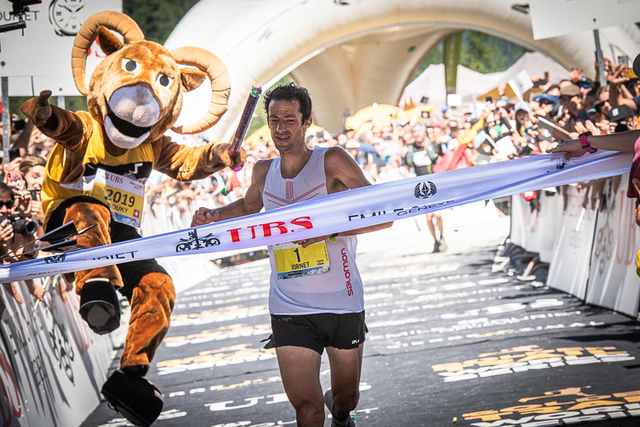
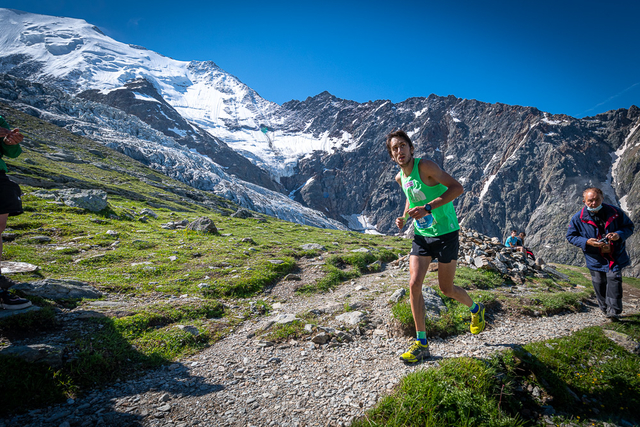 As ever, there is a very strong contingent of runners from Italy in both the men’s and women’s races. Henri Aymonod is our current leader of the men’s World Ranking and the World Cup standings, having finished 3rd at La Montee du Nid d’Aigle and 3rd at Tatra Race Run. He was the winner of last weekend’s Piz Tri Vertikal (and many other vertical races during the last couple of years). Francesco Puppi is fresh from a 2nd place at La Montee du Nid d’Aigle and currently lies 2nd in the World Ranking. Our runner up in the 2019 Long Distance Championships will be looking to improve on his 16th place in 2019, after having finished 4th in 2018. We know that Xavier Chevrier is in form because he won La Montee du Nid d’Aigle a few weeks ago. He’s also been 9th at the World Championships in 2019 and 3rd in the European Championships. Cesare Maestri was 5th at this year’s Grossglockner Berglauf, 2nd in our World Championships in 2019 and men’s winner of Challenge Stellina in 2020. In addition, Alex Baldaccini was 7th at Grossglockner Berglauf and 3rd at the Italian National Mountain Running Up and Down Championships. Italy could well feature on the men’s podium.

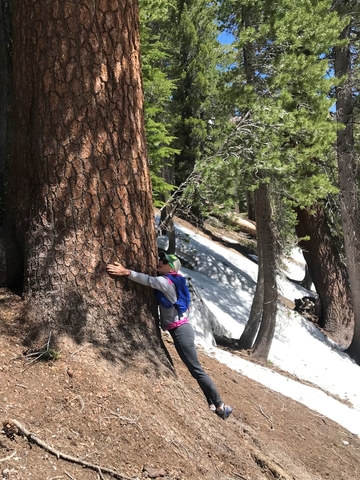 planet. That what affects one, affects all. We are also faced now with extreme environmental crises like the devastating heat wave that the Pacific Northwest is dealing with as I write, receding glaciers, races being cancelled due to wildfires, I could go on. Having your eyes open can be overwhelming. One thing that helps me is to set an intention to also open my eyes to what I can do to help, to stand up for what I believe in. As athletes, we are gifted with a platform to advocate for the things we care most about. I have come to know that I care immensely about the mountains, forests, and wild lands where I am privileged to run. I care about the air I breathe, the rivers and lakes I cool off in, the diversity of living things that make the experience of being a trail runner feel complete. I care about communities – local, global, running, natural.
 Next up was Grossglockner, our first classic mountain race and no stranger to our World Cups. This race was dominated by Kenyan athletes. In the women’s race it was a Kenyan 1 – 2 – 3, Joyce Muthoni Njeru took the top spot, Purity Kajuja Gitonga second and Lucy Murigi third. The men’s race was also won by Kenyan Lengen Lolkurraru, with Filimon Abraham (GER) second and Manuel Innerhofer (AUT) third. This spread the points slightly wider, but Charlotte Morgan, Henri Aymonod and Lorenza Beccaria (ITA), all of whom took part in Tatra Race Run, finished in the top 10 and added to their tallies.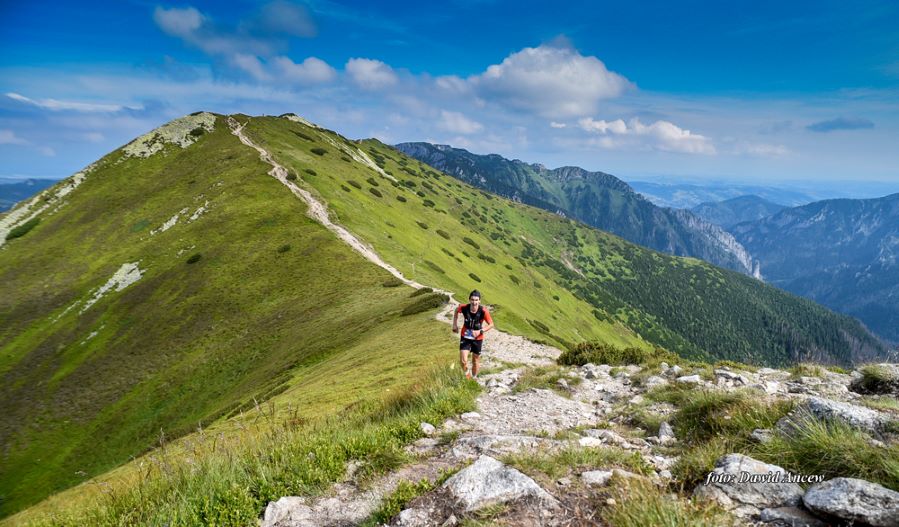
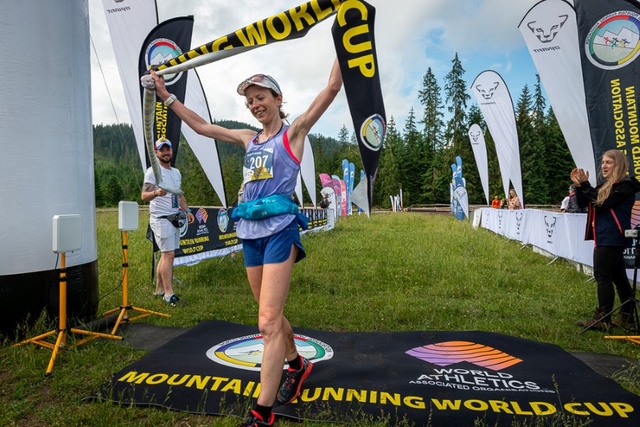 Charlotte Morgan leads the women’s competition on 235 points, amassed from two podiums and a top 10 finish, out of three starts. Charlotte has been a strong performer in mountain races for several years now. She had a very successful 2019, with a seventh place in the World Long Distance Mountain Running Championships, seventh at Grossglockner, fourth at Trofeo Nasego and she finished ninth overall in the World Cup. She won the World Long Distance Mountain Running Championships in 2018 too, so it’s no surprise to see Charlotte excelling in the long mountain races this year.
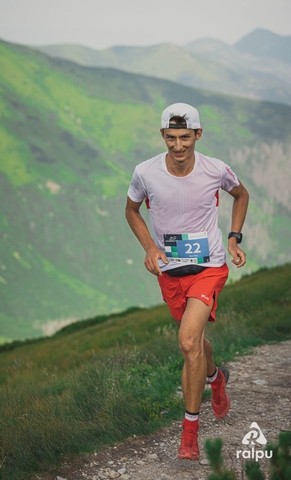 In the early stages of the men’s race a breakaway group formed fairly quickly once the long, first ascent began. This group included Peter Frano, Andrzej Witek, Raul Criado and Kamil Lesniak (POL), with Dariusz Marek (POL) and Marcin Swierc (POL) also in contention. A small group also started to pull away in the women’s race. It included Katarzyna Solinska (POL), Charlotte Morgan, Katarzyna Jakiela-Rzadkosz (POL), Marcela Vasinova and Dominika Stelmach.
 Peter Frano managed to maintain a gap of 4 minutes and he won the men’s race in 4.30.18. Andrzej Witek also held onto 2nd (4.34.39) and Raul Criado put in a gritty performance to finish 3rd in 4.39.45. He managed to hold off Miroslav Hrasko, who was 4th (4.41.55). Kamil Lesniak (POL) rounded out the top 5 for the men.