WORLD MOUNTAIN RUNNING ASSOCIATION

Author: Tomo Sarf

World Cup Stage Four: Tatra SkyMarathon

For the 4th round of the World Cup we head back to the Tatra Mountains in Poland for Tatra SkyMarathon. This is our next long distance mountain race, at 40km with 3,300m of ascent!

 This year’s World Cup kicked off in the Tatra Mountains at Tatra Race Run and it proved to be a spectacular venue for mountain running. The organisers describe the terrain as ‘steep but runnable, with a rocky and gravel surface’. The bulk of the climbing in the course comes from two long ascents with over 1000m of climbing on each.

The race starts at Ko?cielisko, just west of Zakopane. The route begins to climb almost immediately, before reaching the high point of Krzesanica at 2096m at the 11.8km point. This is one of the four Czerwone Wierchy peaks (Red Peaks) in the region. The route then descends back down to about 1100m at Hala Ornak, the 19km point. But there won’t be any respite for the runners as they will then need to climb 1000m again, all the way up to Starorobocianski Wierch, the highest point on the course, which they’ll hit at the 26.2km mark. Then it’s down, with one final, smaller sting in the tail, all the way back to Ko?cielisko.
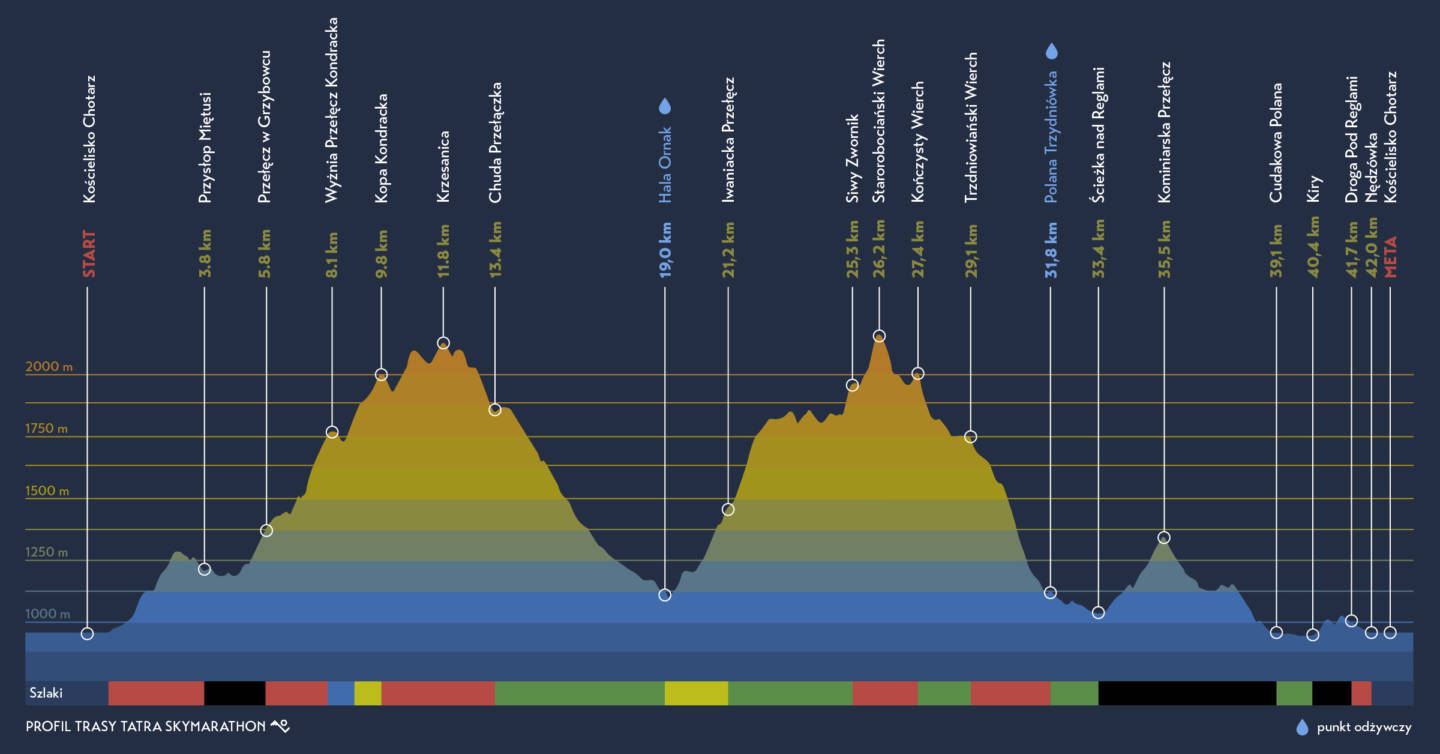
TATRA SKYMARATHON 2 uai 1440x754

A long part of the route follows the West Tatra Mountain Ridge which promises some incredible views. From the photos we’ve seen I t really does look like a fantastic route. As the organisers say, “It’s fast, it’s technical and beautiful. I’m sure you will enjoy it.”

There’s a strong field in both the women’s and men’s races. Some athletes who achieved success in Tatra Race Run are back for more. We’ve got Charlotte Morgan (GBR), the women’s winner, Iwona Januszyk (POL), who was 3rd, Katarzyna Fraczysta (POL), 8th, and Joanna Piatek (POL), 11th. Marcela Vasinova (CZE), who was 2nd at last weekend’s DoloMyths Run, will also be taking part, as will Katarzyna Wilk (POL), who was recently 2nd at Cortina Trail. Katarzyna Solinska will also be one to watch. 

For the men Kamil Le?niak (POL), who was 8th at Tatra Race Run will be on the start line, as will Raúl Criado Sánchez (ESP), who finished 15th. Marcin Swierc, Polish champion, known for podium finishes at the CCC and TDS, will definitely be one to watch.

3 of last year’s top 5 men will return to this race this year: Peter Frano (SVK) was 2nd, Kamil Le?niak 4th, and Andrzej Witek 5th. Other strong Polish runners to watch include Maciek Dombrowski and Dariusz Marek.

The race starts at 7am on Saturday. You can follow the action live at: http://event.trackcourse.com/view/tatra-sky-marathon-2021

Or via our social media channels at:

www.instagram.com/wmramountainrun

www.facebook.com/worldmountainrunningassociation

www.twitter.com/wmramountainrun

#WMRAWorldCup

Everyone Can Compete On Equal Terms in the Mountains

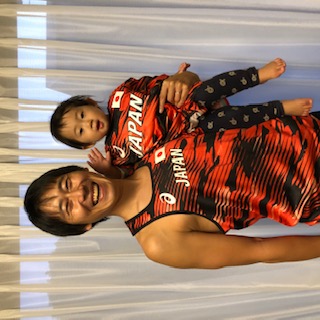
Our latest athlete post comes from Fujio Miyachi, who tells us about the challenges and rewards associated with being a Japanese athlete travelling to mountain running races in Europe and beyond. 

Mountain running is a European sport. Whenever I travel to Europe, I always feel that’s true.

Living in Japan, I’m at a huge disadvantage geographically. Travel is the biggest reason for this. The time and money needed for travel is not insignificant. In addition, as I only stay in the European country for a short period of time during the race, I have a hard time adjusting to the time difference. By the time I get used to it, I am often back home. However, even with all that, I still think it is an attractive sport.

In mountain running races, there are a lot of African runners. I believe that this is largely due to the geographical characteristics of Europe. In Austria, Kenyan runners, including road runners, have set up a camp where they train and interact with local runners on weekdays, and on weekends, they compete in races around the country to earn money. It is a very interesting initiative.

In the past few years, there have been changes in the World Cup. The World Cup races are now being held in the Americas. (note: the traditional Pikes Peak race in Colorado was once held as the Long Distance World Championships). The 2019 World Championships were held in Argentina. Whether it’s Europe or the Americas, it’s going to be a tough trip for me. But, I think it is important for mountain running community to have World Cup races around the world from the perspective of promoting this sport.

2019 11 16 20.05.11The trip to Argentina was very difficult for me. There was a strike at the airport in Argentina, and I was stranded for two whole days without a flight. So, I arrived at the race venue just before the opening ceremony the night before the race, and my preparation was rushed. This is one of the risks I take when I travel intercontinentally. If I lived in Europe, where most of the races are held, I could find alternative ways to travel even if I can’t fly.

So, is it all hard work? I don’t think so. Most people in the race venue were very surprised when I told them that I was from Japan (they seemed to think that I lived in part of Europe, so they were really surprised when I told them that I came from Japan just to participate in the race), but they were very welcoming. Not only did they call out to me when I was walking around town, but sometimes they even gave me a ride to my hotel. When I went to a cafe, they treated me to a meal, and after the race, they served me various kinds of alcohol. I’m not much of a drinker, but I tried to spend as much time with them as possible because I could see the pleasure they took in entertaining me. It’s not every day I can get such a great opportunity.2019 11 16 20.58.50

My name is Fujio. Since it is pronounced the same way as Mt. Fuji, I explained ” The Fuji in my name, Fuji-o, is the same as Mt. Fuji” (Strictly speaking, the Chinese characters of my name are different from ones of Mt. Fuji). So, I was often called “Fuji as well as “Fujio”. I was also called “Japanese” or “Japan”. I don’t know the reason, but I imagine that the rumor spread around the race venue in advance that there was a guy from Japan who came to run in their town’s event . Especially during the race, it made me very happy to be called “Japan” or “Japanese” as much as my name. I was also happy and energized when I found the Japanese flag among the flags of the competitors displayed on the course.

I try to behave in a way that shows I am proud to be Japanese. To them, I am Japan itself. My polite behavior and the fact that I have challenged myself in various parts of the world would be an asset for young Japanese runners who want to challenge themselves in the near future. Although it’s been difficult for me to travel the 2019 11 02 16.55.05world due to Covid-19, I will continue to challenge myself as much as possible and leave my mark as a pioneer of mountain runners in Japan.

In the mountain running community everyone is friendly, from the runners to the race organizers, member of the international association and the local people of the race venue. Because mountain running is not a big sport, the psychological distance among the people is close and the community is like a family. I think this is one of the assets of mountain running community. If I have a problem, I can always ask someone and they will help me to solve the problems related to transport arrangements, a hotel reservation, or anything else. I strongly feel that in Europe, sports have transcended culture and become a part of life. Mountain running has not yet become a popular sport in Asia. But it’s a simple and fascinating sport where everyone can compete on equal terms in the mountains. So, I see a lot of potential for it in Asia. I’ll be writing about my experiences and thoughts for the future over the next few articles, so be sure to read the next one!

World Masters Mountain Running Championships to be held in the Stubai Valley

The mountain running world championship for participants aged 35 and over will take place – a year later than planned – as part of the Schlickeralmlauf in the village of Telfes in the Stubai Valley.

The first major sporting event of summer 2021 in Stubai, the 4th STUBAI ULTRATRAIL, ran smoothly, boosting the confidence of the organising team that the 20th World Masters Mountain Running Championships can also be held as planned at Telfes in the Stubai Valley. Any athlete over the age of 35 can take part in the championship, which takes place between 3 and 5 September 2021. For the younger age groups, the Schlickeralmlauf will be held as an open race on 4 September. To build the atmosphere, the now traditional children’s races, the charity race and the Telfer Wiesen Run will take place in the Stubai Valley on the preceding day.

Over the first weekend of September 2021, all eyes of the World Mountain Running Association (WMRA) will again be on Telfes in the Stubai Valley. Once again, the sunniest village in the valley is the venue for a major mountain running event. Now for the second time, the 20th World Masters Mountain Running Championship will take place using the course of the Schlickeralmlauf, as it did in 2014.

Telfes

Established trust and proven safety

‘Our many years of successful cooperation with the World Mountain Running Association have paid off with the organisation of the 20th World Masters Mountain Running Championships. When we had to cancel the championships last year, the WMRA stood by us. The award to hold the event was reserved for us. It did not go elsewhere, but was simply pushed back by a year,’ says Andreas Stern, head of the organising committee.

‘As things currently stand, the event will be able to go ahead provided that we abide by the Austrian ‘3G’ rules for Covid safety (tested, vaccinated or recovered). The safety policy has proven itself a success, as we were able to demonstrate with the first major running event of the year, the 4th STUBAI ULTRATRAIL. We nevertheless ask all participants to familiarise themselves carefully with the regulations from their various countries and to exercise appropriate caution. Then nothing should stand in the way of another weekend of running sport,’ adds Adrian Siller, chairman of the Stubai Tirol Tourism Association.

Two starts, one finish line

The 20th World Masters Mountain Running Championships on 4 September 2021 will start from two locations. The finish line, at 2,136 metres above sea level at the Kreuzjoch mountain station at the Schlick 2000 Hiking Centre, is the same for everybody. Women and men will be judged across nine age groups each. All women’s groups and the men over 55 will start from the Middle Station of the Kreuzjochbahn and will face a course of 7.4 kilometres involving a climb of 775 metres. Participants in the age groups M35 up to and including M50 will start from the village square in Telfes. Their course is 11.5 km in length and climbs by 1,157 metres to the finish.

The 20th World Masters Mountain Running Championships are open to all keen mountain runners aged 35 or over. The upper age limit is 79 years.

Aside from the world championships, of course, there will also be the opportunity to take part in an open competition on the Schlickeralmlauf once again. As usual, this starts from the village square in Telfes. It has a course of 11.5 km with a climb of 1,157 metres.

Supporting programme

In addition to the race on Saturday, runners and spectators will be offered an attractive supporting programme.

The children’s races that have now become a tradition, and the charity race in which participants can earn a donation per lap for social purposes, will be held on Friday 3 September. Meanwhile the Telfer Wiesen Run invites all running enthusiasts to take part in a flat 8-km circuit, before the official opening ceremony for the World Championship takes place in the evening, followed by Tyrolean hospitality in the community hall and in the Music Pavilion in Telfes.

There also the winners will be chosen after the races on the Saturday, after which the World Masters Mountain Running Championship will reach its finale with live music.

On Sunday, visitors and participants will again have the chance to try one of the highlights of Stubai, such as the WildeWasserWeg, the Summer Toboggan Run at Mieders or perhaps to visit the Top of Tyrol summit platform on the Stubai Glacier.

Telfes small web 1

Registrations, still at a reduced rate until 31 July 2021, and further information are available at: www.schlickeralmlauf.com

Any changes to the programme as a result of the Covid situation will also be communicated via the home page.

Murigi and Chevrier Triumph at La Montee de Nid d’Aigle

La Montee du Nid d’Aigle was a highly anticipated race for us and it certainly didn’t disappoint. With its race hub in beautiful Saint-Gervais-Les-Bains, in the Haute-Savoie region of France, we knew it would provide a stunning setting, but pull this together with a tough course and a field of top runners and you have all the ingredients of a really fantastic mountain running race.

 Blue skies greeted the runners at the start, with a few whispy clouds higher up in the mountains. Conditions were hot for the runners, particularly on the exposed parts of the course. And let’s not forget that this race is 19.5km of relentless, uphill-only running. No respite, nowhere to hide. This is mountain running.

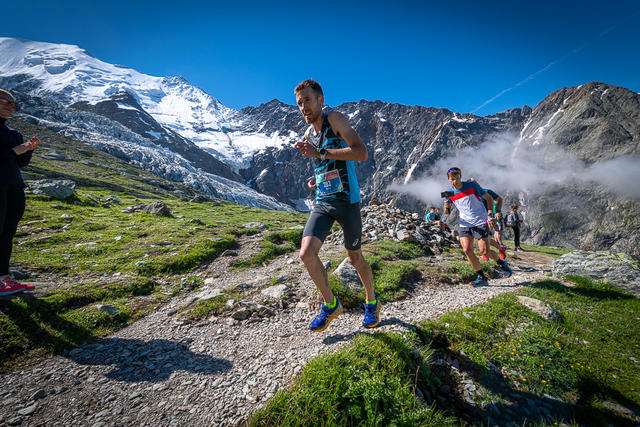
 DSC8656The route would take the runners from the start at Le Fayet along the river towards St Gervais, and then to La Villette, climbing gradually. From here it heads away from the road and into the trees and begins to climb more steeply and it continues to climb relentlessly all the way up to the finish at Refuge du Nid d’Aigle at 2394m. The final section gets steeper still, so when there’s nothing left in your legs, you still have to find that extra push.

With deep fields in both the men’s and women’s races, both podiums were wide open. Runners like Lucy Murigi (KEN), Henri Aymonod (ITA), Susanna Saapunki (FIN), Sandor Szabo (HUN) and Lucie Marsanova (CZE) had raced at Grossglockner just last weekend. Would they have recovered fully? Similarly, Francesco Puppi (ITA) and Anais Sabrie (FRA) had done well in a very competitive Mont Blanc Marathon just two weeks before. DSC8738

As expected, the flatter first few kilometres of the race were fast and furious and before too long gaps had opened for the men and women. Lucy Murigi had struck out into a lead over Anais Sabrie (FRA) and Christel Dewalle (FRA) and Xavrier Chevrier (ITA) and Francesco Puppi had made a break for it, but they were hotly pursued by a group including Julien Rancon (FRA), Alexandre Fine (FRA) and Henri Aymonod.

The men’s race remained close but Chevrier pulled away from Puppi, and the chasing runners jostled for that third place. Murigi managed to secure a good lead, but could she keep it?

 DSC8646It was all very close in the final stages. Chevrier took the win in the men’s race in 1.44.25 (a new course record), followed by Puppi, just over one minute behind (1.45.49). Aymonod completed the all Italian men’s podium in 1.46.44. Julien Rancon was fourth in 1.48.43 and Remi Lonchampt rounded out the top 5 in 1.50.18.

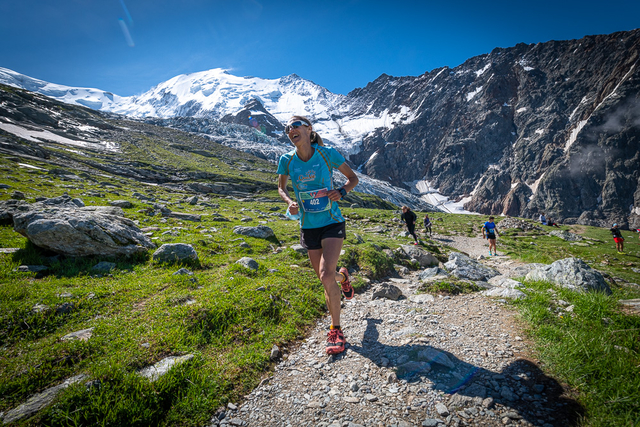
Dewalle, who is a 10 time French VK champion and excels on the steeper climbs, chased Murigi hard on the final climb, but she just couldn’t catch her. Murigi won in 2.06.08 (agonisingly, just 2 seconds outside the course record), with Dewalle just 21 seconds behind and Anais Sabrie was just a minute behind in 2.07.34. Mathilde Sagnes (FRA) was fourth in 2.08.37 and Simone Troxler fifth in 2.10.43. All in all a very close top 5, all within 4.5 minutes.   DSC8746

See race results and athlete rankings here: https://ranking.wmra.info/

Next stop for the World Cup, Tatra SkyMarathon on Saturday 24th July, our next long mountain race! See the full calendar of events here: https://www.wmra.info/calendar/2021-major-events

World Cup Stage Three: La Montee Du Nid D’Aigle

This year’s World Cup is a mix of old classics and new races and our next race, La Montee Du Nid d’Aigle, on Saturday 17th July is a bit of both! This will be the 34th edition of the event, so it’s definitely a classic, but it’s the first time it will be part of the World Cup. Which is hard to believe because this race has all of the hallmarks of a fantastic mountain race.

 The location of Saint-Gervais-Les-Bains has to be one of the best in the world for mountain sports. Located next to the Italian and Swiss borders, the Haute-Savoie region is an absolute magnet for mountain runners and skiers.

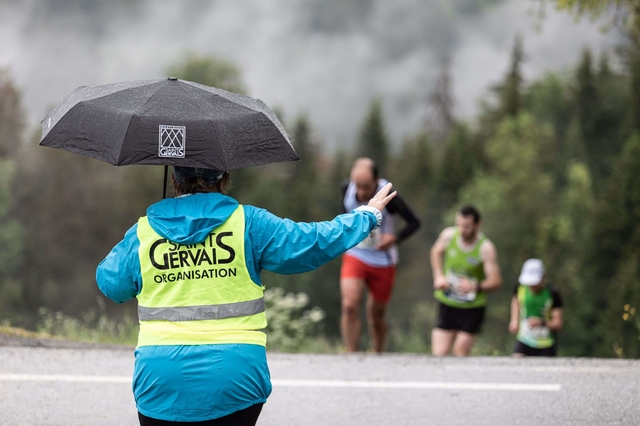
La Montee Du Nid d’Aigle was actually one of the first mountain races in France and as such, it’s a must-do race for French runners. It’s also really important to the community in Saint-Gervais, with 200 volunteers helping out every year. It’s an integral part of the identity of Saint-Gervais and the local people embrace it, like all the best races.

MNDA2 web

The route

This is our next classic mountain race at 19.5km, uphill-only with 2000m of ascent. The route begins at Parc Thermal, Le Fayet and initially follows the river towards St Gervais, and then to La Villette, climbing gradually. From here it heads away from the road and into the trees and begins to climb more steeply and it continues to climb relentlessly all the way up to the finish at Refuge du Nid d’Aigle at 2394m.

The favourites

cfb5f759 070f 45f1 b544 e6fc81a9c5fcThis year it looks like the race will be playing host to some of the top mountain runners in the world, some of whom have featured in the World Cup already this year. In the women’s race Lucy Murigi (KEN), former World Champion, is hot on the heels of her 3rd place at last weekend’s Grossglockner Berglauf. Susanna Saapunki (FIN) will also be looking to build on her success at Grossglockner, where she finished 4th. Lucie Marsanova (CZE), 5th at our first World Cup race, Tatra Race Run, will also be toeing the line, alongside 10th placed Timea Merenyi (HUN).

Elise Poncet (FRA), who finished 2nd in the 2019 World Championships will certainly be one to watch and she’s joined by many impressive fellow French athletes on home turf. Christel Dewalle is a 10 time French VK champion, so should do well in an uphill-only race. Fresh from a 2nd place at the Mont Blanc Marathon a couple of weeks ago, Anais Sabrie could also challenge, as could Julia Combe, who was 3rd in the Mont Blanc Cross.

Tatra race m podium webIn the men’s race Henri Aymonod (ITA) will be looking to capitalise on his World Cup results so far this year – a 3rd place at Tatra and a 10th place at Grossglockner. Compatriot Francesco Puppi, our 2nd placed runner in the World Long Distance Championships in 2019, recently finished 5th in a very competitive Mont Blanc Marathon. Petro Mamu (ERI) will always be a threat, having finished on the podium in most of the big races, including Sierre-Zinal and Smarna Gora. Sandor Szabo, 6th in the 2019 World Cup, is always a tough competitor, as he proved at Tatra, where he finished 6th and Grossglockner, where he was 13th. Xavier Chevrier (ITA) will also be one to watch.

But they will face serious competition from the French athletes. Alexandre Fine was 5th in the 2019 World Championships (Classic Distance) and Simon Paccard (FRA) is fresh from a 3rd place at the Mont Blanc Cross. Julien Rancon, Julien Michelon and young athletes like Remi Lonchampt and Theo Dancer will be exciting to watch.MNDA3

Will records fall this year? The women’s record, incredibly, has stood since 2006 when Isabelle Guillot set the current mark of 2.06.06. The current men’s record of 1.47.49 was set by Manu Meyssat in 2017.  

Commitment to sustainability

An aspect of the race which is worth highlighting is its commitment to limiting their environmental impact. The measures they are taking include:

  • Using local sponsors and partners to support the local area and reduce the need for transporting goods
  • Using reusable flags and banners
  • No plastic bottles or cups
  • No paper flyers or posters and all race registration online-only
  • Using the tram instead of a helicopter to transport equipment to the mountaintop finish
  • Encouraging runners to travel by train and providing free shuttles from the station to the race village
  • Carbon accounting to calculate emissions

How to follow the race

We will be bringing you the latest news and results on our social media:

www.instagram.com/wmramountainrun

www.facebook.com/worldmountainrunningassociation

www.twitter.com/wmramountainrun

#WMRAWorldCup

Grossglockner Berglauf Race Report

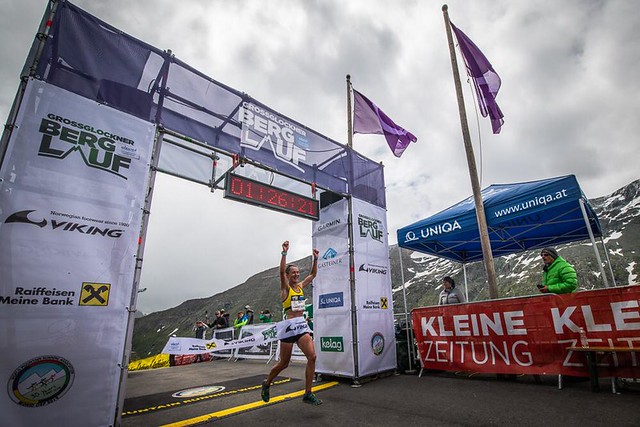
Mountain weather is an unpredictable beast, which often adds an extra challenge to our sport. Despite blue skies the day before, the runners woke up to grey, rainy skies and chilly temperatures in Heiligenblut. But nothing could dampen their enthusiasm for one of the most famous and revered mountain races in the world. This is Grossglockner Berglauf.

 An uphill-only race of 13km with 1,265m of ascent along the way, this was our second event in the 2021 World Cup. Its prestige always attracts some of the best mountain runners in the world and this year there were deep, high quality fields, with former podium finishers such as Filimon Abraham (GER), Purity Kajuja Gitonga (KEN), and Geoffrey Gikuni Ndungu (KEN) on the start line, as well as runners like Charlotte Morgan (GBR), Henri Aymonod (ITA) and Alice Gaggi (ITA), who were fresh from success at our first World Cup race of the season at Tatra Race Run.

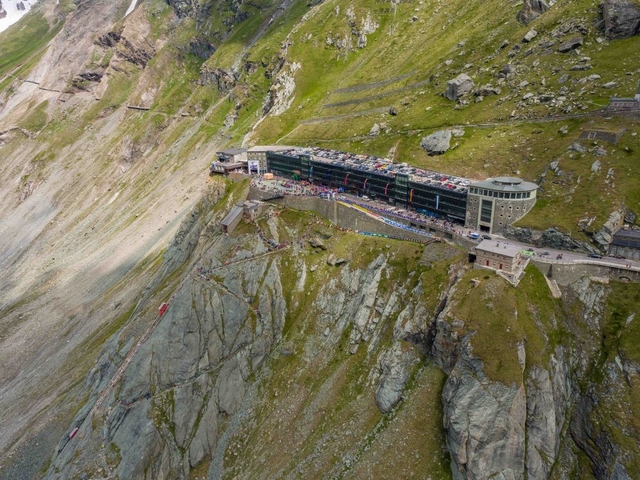
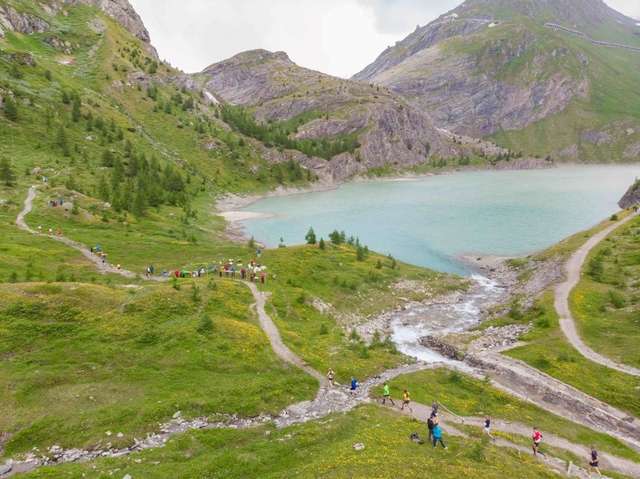
The first kilometre is flat along the river, so the early pace is always fast, and then the route begins its long, relentless ascent towards the finish at the Kaiser-Franz-Josefs hut. In the final kilometre the route gets steeper still, so this is a tough mountain race which gives runners little respite along the way.

60936891 57d4 42e7 8425 35750d7888fbThe elite field set off at 8.30am in cool, drizzly conditions. In the women’s race Purity Kajuja Gitonga opened up a small, early lead of around 20 seconds over Lucy Murigi and Joyce Muthoni Njeru in the first section. Around a minute behind the leading three runners was a group including Lorenza Beccaria (ITA), Gaggi and Susanna Saapunki of Finland.

In the next section of the race Gitonga and Njeru went through the timing point neck and neck, with Murigi just behind. Behind Murigi a gap had opened up back to Saapunki, Beccaria, Mojca Koligar (SLO) and Gaggi. Going into the final, deciding section of the race, with the cruel kick up to the finish line, the podium places looked like they would be going to the Kenyan runners, but in what order? And the top 10 was still fairly open for an exciting finish.cfb5f759 070f 45f1 b544 e6fc81a9c5fc

In this final section Njeru managed to pull away from Gitonga a little and Murigi wasn’t able to stay in touch with these two runners, though she kept a good gap from the chasing runners. It was a Kenyan 1 – 2 – 3 with Njeru winning in 1.23.46, Gitonga second in 1.24.10 and Murigi third in 1.28.00. Saapunki took fourth place in 1.31.46 and Beccaria fifth in 1.32.22. Places six to ten went to Koligar, Gaggi, Camilla Magliano (ITA), Adela Stranska (CZE) and Morgan. See full women’s results.

The men’s race was just as close and exciting and also came down to that final section. In the early stages Lengen Lolkurraru (KEN) ran together in the lead with last year’s winner, Abraham. Just behind them were Geoffrey Gikuni Ndunga (KEN), and a big group all within a few seconds of each other including Manuel Innerhofer (AUT), Cesare Maestri (ITA), Alex Baldaccini (ITA), Zak Hanna (IRE), Lorenzo Cagnati (ITA) and Timotej Becan (SLO). This was shaping up to be a very competitive race.

54a79cd1 f2f1 43b8 b741 2f2760fb02b7In the next section Lolkurraru and Abraham were still neck and neck but they had managed to open a small gap of around 45 seconds from Innerhofer, Maestri and Ndunga. A group of about six runners continued to chase them down and it was still anybody’s race with the final, nail-biting section to go.

By the finish Lolkurraru had finally managed to pull away from Abraham, winning in 1.11.48, with Abraham just behind in 1.12.34. In a sprint finish Innerhofer took third place in 1.13.44, with Ndunga just three seconds behind. Maestri rounded out the top five in 1.14.17. Places six to ten went to Becan, Baldaccini, Hanna, Cagnati and Aymonod. See the full men’s results.

So it was a double victory for Kenya and a spectacular Kenyan 1 – 2 – 3 in the women’s race. The first two events of our 2021 World Cup have certainly delivered some exciting racing and we don’t have long to wait until the next one! Next stop St Gervais in France on Saturday 17th July for La Montee Du Nid d’Aigle!  Bring on round three!

fe61d944 c2c8 4489 bbd0 8442c6faaaf8

397b19dc 37ae 4d72 acf4 968b1a153cfb

Announcement About International U18 Mountain Running Cup 2023

We are pleased to announce that the International U18 Mountain Running Cup 2023 will take place at the MaXi-Race in Annecy. The event will take place on the 28th May.

The race has a spectacular lakeside setting and there is a huge network of incredible mountain trails all around Lake Annecy. We anticipate that it will provide both a great experience for young runners, as well as testing courses. The race was in our World Cup in 2019, where it served as the exciting opening stage. 

The organisers say: “We are super motivated and the development of the practice among young people and a very very strong driver in our organization”.

We look forward to bringing you more news on this 2023 event in the coming months.

Maxirace small 2

Masters Mountain Running Competitions

In our next athlete article Kasie Enman gives us the lowdown on Masters mountain running championships, and how they can inspire runners in various age groups. 

 While the spotlight often shines brightest on the top podium at championship mountain and trail events, there are quite a few additional opportunities for competitions within the competition. Masters championships, age group prize categories, and friendly rivalries with those in a similar stage of life as yourself can be fun and motivating. I am just starting to learn what masters age group competition is all about, and thought I would share some of what I found. Please add your own recommendations in the comments!

Simon Gutierrez, comparing the experience between competing in the open and masters Mountain Running World Championships: “I was fortunate to be able to attend both Championships and was always in awe with the comradeship, encouragement and will of the athletes. Age is not a limiting factor, as far as being able to enjoy the sport of Mountain running.”

F935C3BBB7104C5B9DD154D86A5971EDA “Masters” athlete is defined as 35+ years at the World Mountain Championship, or 40+ years at some regional competitions, including my home country, the US. Categories are often split into 5 year increments so your 45th, 50th, 55th and so on, so a birthday becomes a reason to celebrate gaining a new advantage as the youngest in your age group! My experience so far has been that masters competition is very welcoming while still providing a high level of competition. The biggest limitations may be a lack of funding for races requiring international travel and an overall shortage of mountain and trail races that make a point to recognize the upper age groups.

Dave Dunham: “I love that the championships are run in five year age groups. It is so much fun to compete head to head with my peers. Although we’ve all grown older the competitive fires still burn fiercely.  We may not be as fast as our halcyon days but still enjoy getting out there and testing our limits.”


Masters Competition Resources

This annual event features different start times for each 5 year age category, making for some exciting head to head competition. This event also features team competitions, with the top 3 for each nation scoring points – a motivating element and chance to represent your country.

Next Up: 3-5 September 2021 in Telfes in the Stubaital

Awards top 3 in 5 year age groups for 40 and beyond. Multiple race opportunities across multiple disciplines throughout the year. The masters competitions are usually held in combination with the open competition, with everyone wearing their age on a back bib number so you know who to target.

Oversees the biannual European Masters Mountain Running Championship; the European Master Mountain Running, Trail Running, Nordic Walking (EMMTRC) Championship; and the European Masters Off Road Championships.

Comprehensive site for global masters competition.

Photos credit Dave Dunham from the 2014 World Masters Mountain Running Championships in Telfes.

World Cup Stage Two: Grossglockner Berglauf

On Sunday 11th July we head to Austria for the next stage of the 2021 World Cup with Grossglockner Berglauf. This race has provided some epic mountain running races over the years and excitement is high for this year’s race, which features some of the best in-form athletes of the moment.  We take a look at this historic race and the athletes who are expected to feature. 

 Grossglockner Berglauf takes place in Heiligenblut, under the shadow of Austria’s highest mountain (at 3,798m), Grossglockner. It’s the 22nd edition of the race, so it’s an event with a rich history, and it’s seen the very best mountain runners in the world taking part over the years. Previous winners include Jonathan Wyatt, Anna Pichrtova, Andrea Mayr, Antonella Confortola, Filimon Abraham, Petro Mamu and Sarah Tunstall.sarahT

This race, our second stage of the 2021 World Cup, is classed as a classic mountain race at 13km in distance and 1265m of ascent (see the full line-up of our short uphill, classic and long distance races in the World Cup here: https://www.wmra.info/calendar/2021-major-events). It follows on from our first World Cup race, Tatra Race Run, on 27th June. Catch up on the news from that race here: https://www.wmra.info/news/latest-news-from-the-wmra/875-world-cup-stage-one-tatra-race-run.

The Grossglockner Berglauf route starts in Heiligenblut and follows the river initially, before climbing up to the famous Briccius Chapel, past the quaint Trogalm hut, then the ‘Pasterze’, the longest glacier in the Eastern Alps, before the final lung-busting climb of 900m to the summit. The summit finish is at the famous Kaiser-Franz-Josefs-Hohe, with (hopefully) stunning views all around – a great reward for all who run the race.

GB finish webWho are the favourites this year? 

In the women’s race Charlotte Morgan of the UK, who is fresh from winning our first World Cup at Tatra, will be looking to increase her lead in the women’s competition. She finished 7th at Grossglockner in 2019. Also fresh from success at Tatra are 2nd placed Alice Gaggi  (ITA), who also finished 3rd at the recent Italian National Championship – up and down, 4th placed Lorenza Beccaria (ITA), (4th at the National Championship) and Lucie Marsanova (CZE), who was 5th at Tatra and also finished 5th in the 2019 World Cup. All are clearly in-form athletes. Former World Champion from 2017, 2nd placed athlete in the 2019 World Cup and winner of the recent (ChieseRun) Italian National Championship race, Lucy Murigi (KEN), will always be an athlete to watch. She’ll also be joined by strong compatriot Purity Kajuja Gitonga, who finished 2nd in the 2019 Grossglockner Berglauf.

Other women expected to be in contention include: Louise Mercer (UK); Timea Merenyi (HUN); Camilla Magliano (ITA); Charlotte Cotton (UK); Susanne Mair (AUT); Annika Seedorf (NED); Cecilia Basso  (ITA); Joyce Muthoni Njeru (KEN); and Susanna Saapunki (FIN).  

The men’s race looks equally exciting, with 2019 winner (and our 2nd placed athlete in the 2019 World Cup) Filimon Abraham (GER), returning. Henri Aymonod of Italy, fresh from his 3rd place  at Tatra, will be one to watch, and with a lot of success at vertical kilometres he’s always strong at uphill-only races. Cesare Maestri, also of Italy, was 2nd in the World Championships in 2019 and 2nd in the recent National Mountain Running Championship (up and down), and could be in contention. Sylvain Cachard (FRA) had a very successful 2020 with wins at Smarna Gora, Trofeo Nasego and the French National Championships. The local Manual Innerhofer (AUT) was 3rd in the 2019 Grossglockner Berglauf and recently won the Austrian National Championships. Zak Hanna (IRE) is definitely an athlete to watch this year, having just won the Marathon du Mont Blanc VK and finished 5th at ChieseRun, the Italian National Championships. Geoffrey Gikuni Ndungu (KEN), who finished 2nd at Grossglockner in 2019 must also be a favourite.

Other men expected to be in contention include: Ondrey Fejfar (CZE); Alex Jodidio (SUI); Alex Baldaccini (ITA); Eric Muthomi Riungu (KEN); Timotej Becan (SLO); Isaac Kipkemboi (KEN); Lengen Lolkurraru (KEN); Giovanni Tacchini (ITA); Luca Merli  (ITA); Lorenzo Cagnati  (ITA); and Massimo Fracoz  (ITA).

GB aerial web

Follow the race

We will be bringing you the latest news and results on our social media:

www.instagram.com/wmramountainrun

www.facebook.com/worldmountainrunningassociation

www.twitter.com/wmramountainrun

#WMRAWorldCup
Race website: http://www.grossglocknerberglauf.at/

Play More In Nature

In his latest athlete post Fujio Miyachi of Japan tells us how he gets young people to engage with nature through play, encouraging a whole new generation of mountain runners.

When I look back on my elementary school days, as I have written before, I was not athletic at all. However, I believe that growing up in nature had a connection with the fact that I started mountain running when I became an adult.

 I went to a school in Tokyo, but behind the school building there was a large undulating area called Jigoku-dani (Hell Valley), where there was a playground with a steep slope that only senior students could climb. There were also many opportunities to get in touch with nature, such as playing in a nearby park once a week during class in the early grades. I grew up going to a school that tried to encourage students to be independent through their education. Perhaps because of this, although I was not good at sports, I was not bullied for it. In addition, although I was not good at physical education classes, I loved going to school and experiencing various school events.

It is difficult for children who are not good at physical activities like me to accept the fact, even if adults tell them that it doesn’t matter and there are many possibilities other than sports.

So, what I recommend is to give them a variety of experiences through ‘playing’. And, if we pack a variety of elements into that ‘play’, we can give the younger generation a lot of experience as a result.

What did I do when I was a boy??

It was nothing special. I played “Tag”, “Baseball”, and other various games with playground equipment, that anyone can do. In addition, we made special rules for children who are not good at sports or have age differences to make play more interesting. For example, if a child who can run slowly is going to join the game of tag, “it” needs to touch people twice instead of once, or “it” needs to wait longer before chasing people. How can we make it more fun for children? This ingenuity is just as important as being able to move around freely. Flexible thinking generates ideas and makes it harder to get caught up in stereotypes.

What kind of experience can we gain through “playing in nature”?
We can gain different abilities in addition to endurance such as balance, reflexes and explosive power, that will help us in any sport we play. In addition to their athletic ability, I believe that they can become curious children through playing in nature. Vegetation, scenery, seasonal changes, running around in nature, all five senses are fully engaged. It’s not just about running, but it’s also about developing an interest in trees and other living things through exposure to nature. I believe that this kind of interest is also a result of running in the mountains. This is why junior runners should spend more time in nature, playing and running around in the mountains.Fujio story 4 2

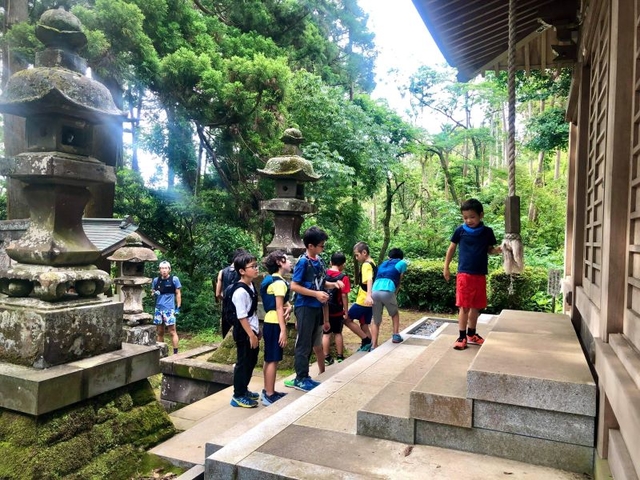
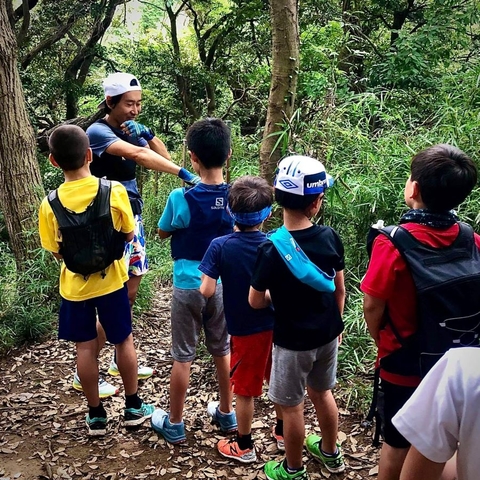
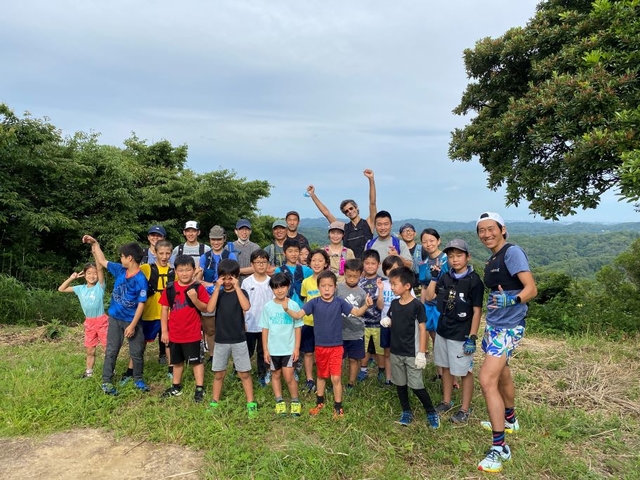
Since this April, I have been running with a group of neighborhood children in the mountains on holiday mornings under the name of the Zushi Junior Trail Running Club. They talk about school homework, games and comics, and run lightly while joking around. And they are always joking. This would be a problem in Japanese school classes, but I think it’s a good thing because they enjoy running and listen to me when I talk about serious things. They are essentially free. That’s why I tell them many tips while respecting their playfulness and keeping that in mind.

When I became an adult, I discovered the joy of running in the mountains, and it was because of these original experiences. That’s why I respect children’s sense of fun.

However, while nature is fascinating, it also causes natural phenomena such as heavy rains and thunderstorms that are beyond human control. I would like to raise more and more children to have a sense of awe towards nature, and to be able to relate to nature well.

 Fujio story 4 4

FUJIO MIYACHI